In the pages that follow, you’ll find important context for each race: who the candidates are, the dynamics of their races, and whether their priorities strengthen working class and socialist policies in Los Angeles. This guide is meant to be both an educational tool and a resource to help your decision making at the ballot box.
You may notice that many races are uncontested or lack strong candidates. This is a consequence of a big-money political system that rewards incumbents and machine candidates, weakening the democratic process. In some cases we did not make recommendations where an incumbent faces a right-wing challenger and is expected to win. Many of these represent “lesser evil” calculations, and in some cases, there simply isn’t anyone to vote for.
Still, building power means continuing to organize and support candidates that can challenge this system and the forces of capitalism. In many down ballot races, your vote can make a big difference in our collective lives.
Endorsements vs. Recommendations
DSA-LA endorsements require a membership vote and come with a commitment of chapter time and resources, and will be displayed in red with a rose 🌹. Candidates listed in this guide without an explicit DSA-LA endorsement are recommendations and may reflect a range of circumstances, and will be listed with a thumbs up 👍.
For example, a recommended candidate (or reccomended measure/proposition backer) might not call themselves or be a socialist, but we believe some elements of their platform will materially benefit the working class of Los Angeles, or that a tactical vote for them is the best choice ahead of the general in California’s top-two jungle primary.
Statewide recommendations are in partnership with California DSA!
We partner with California DSA to provide statewide recommendations. Volunteers from across the state similarly develop recommendations for state and federal races, which are included in this guide. The recommendations we include in this guide for these races are a collaboration between DSA-LA and the CA-DSA team. If you know voters across the state who need help, simply send them this same link - we have integrated all reccomendations and endorsements from the California DSA voter guide right here!
We take one of three possible positions for each race: endorse, recommend or no recommendation. We always try to provide a summary of the discussion and what went into our thinking. The language may shade one way or another: you will see reccomendations that are enthusiastic and strong, others that are weaker protest votes, and others that are best viable options w/ reservations. You will also see races where we clearly outline a best choice candidate that does not meet our recommendation standards. The best way to understand is to read. However, unless you see a rose 🌹 for an Endorsement or a thumbs up 👍 for a Recommendation, we are officially taking no position.
🏛️ Los Angeles City12 races
🏛️ Los Angeles City
Mayor
Los Angeles City
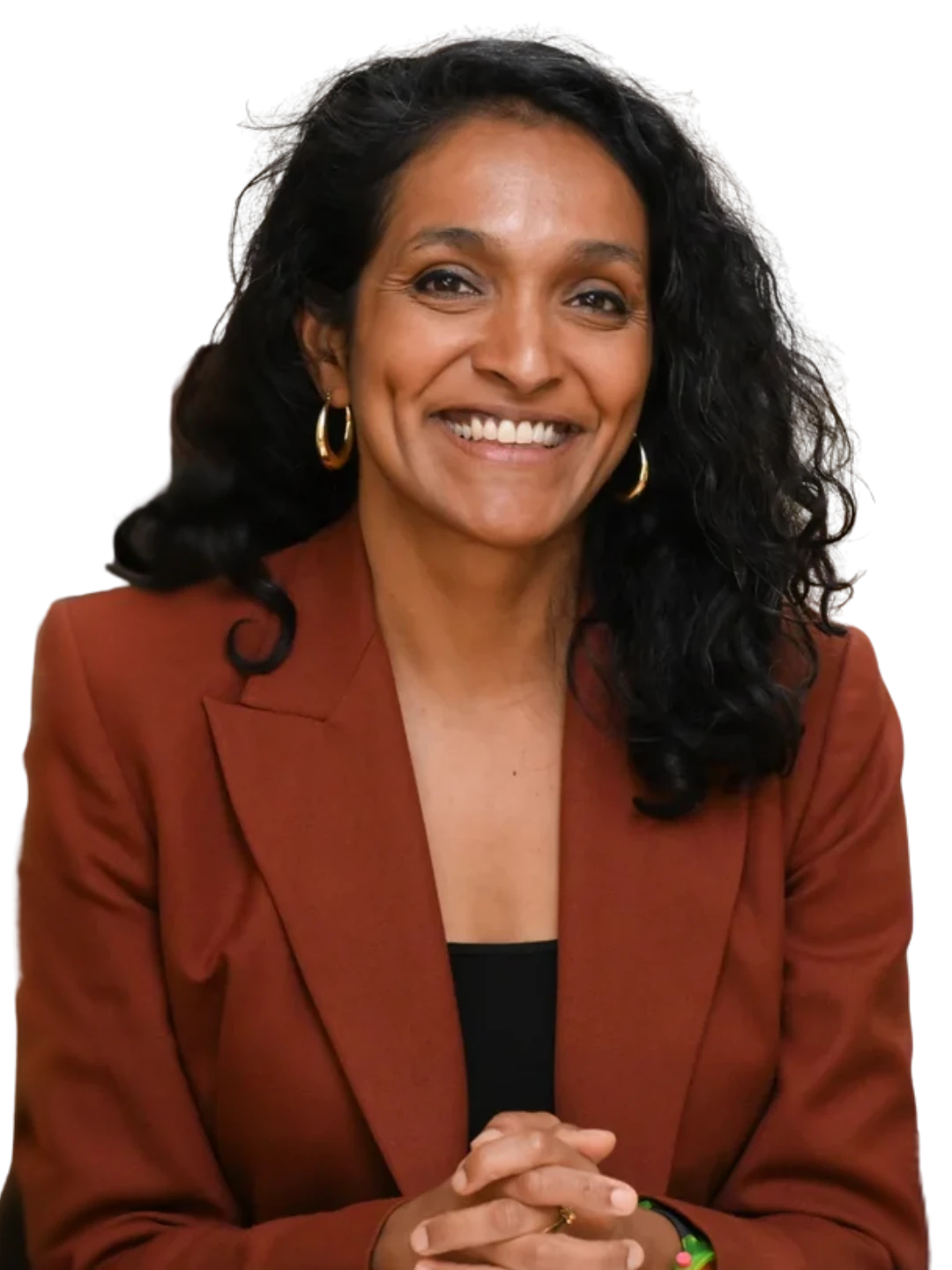
TL;DR: DSA-LA enthusiastically endorses Nithya Raman for mayor because Angelenos deserve a city that works for them—not landlords and corporate interests.
Nithya Raman
EndorsedDSA
The Mayor of Los Angeles is the most powerful figure in Los Angeles municipal politics, proposing budgets, creating executive commissions and committees, and issuing emergency ordinances, and most importantly, getting blamed for everything that goes wrong. Despite being the figurehead for city government, the LA mayor is still significantly structurally weaker than other big-city mayors like Zohran Mamdani in New York City. That being said, the mayor has a significant amount of power over the function—or dysfunction—of the city.
And speaking of dysfunction, let’s start with the incumbent, Karen Bass.
Four years ago, the former-leftist and longtime pretty-solid-if-imperfect Congresswoman cruised to election against former Republican and very evil billionaire Rick Caruso, building a powerful mandate for her signature “Inside Safe” initiative. The initiative poured hundreds of millions of dollars into getting unhoused people off the street into temporary shelters–sometimes to permanent housing, but most importantly to Bass’ base, out of sight. Like most of Mayor Bass’ mayoralty, it’s been a political failure. While some districts, like (notably, socialist-governed) CD13 and CD4 (keep that number in mind, it comes back soon) saw vast decreases in homelessness, in districts governed by law-and-order councilmembers, it yielded continuous human rights violations against the unhoused. At a citywide level, 40% of people enrolled in the program ended up back on the street, a massive expenditure of public funds, primarily into the pockets of hotel and motel operators, and allegations of corruption and embezzlement by service providers.
At some point, whatever part of her character that enabled her to be a relatively okay congresswoman stopped working, and Mayor Bass’s first term has been an endless parade of embarrassments. Polling indicates that her reputation took the largest hit in 2025 in the immediate wake of the Los Angeles wildfires, for which she was initially absent; having learned little from this disaster, earlier this year Bass downplayed the effects of the Lineage fire on Boyle Heights and East LA, claiming that the fumes from 85 million pounds of frozen meat burning in an ammonia fire were “safe to breathe.” Not so.
Maybe this is understandable when we look at what Bass’s austerity plan has done to our city. As Democratic Socialists, DSA-LA clashed with Mayor Bass on her steadfast support to raise salaries for the Los Angeles Police Department, whose budget now makes up 46% of the city’s unrestricted budget, despite warnings that this will require drastic cuts to city services. Mayor Bass’s negotiated salary raise for cops in 2023, which DSA-LA opposed, directly led to the city’s massive billion-dollar budget deficit that resulted in the city cutting street services and laying off hundreds of public workers. Bass has mainly tried to resolve this through quick fixes, like sneaking the Airbnb-sponsored Vacation Rental Ordinance into the budget in 2026 in exchange for a $50 million tax prepayment by Airbnb—which would have added 31,000 new deregulated short-term rentals on top of the 9,000 we already have, raising rents and displacing communities. Though this effort was shot down (partially thanks to DSA-LA’s own Eunisses Hernandez) Bass was rewarded anyway; Airbnb committed $1.5 million to support her re-election.
Despite her significant problems, Bass’ campaign has overwhelming institutional backing across the gamut of the LA Power Brokers: she is endorsed by the Los Angeles County Federation of Labor (LA Fed), and the Business Federation (BizFed); she’s also endorsed by the LA Chamber of Commerce, the LA County Democratic Party, and a majority of overlapping Congresspeople. Her major donors are basically a rogues’ gallery of DSA-LA archenemies: the Los Angeles Police Protective League, Airbnb, Douglass Emmett Properties, the Central City Association, and others.
Faced with a challenger to her left picking up steam, Mayor Bass has fallen back on trying to portray herself as an “activist fighting for change,” hoping people will simply forget that she’s been mayor for the last four years. The most iconic moment of this pivot was her attempt to copy New York City mayor (and DSA darling) Zohran Mamdani’s pothole repair videos, in which the city repairs a pothole in a day. In Bass’s staged version, she explains that they actually couldn’t fix the pothole because someone parked over it; then, she puts up a no parking sign and wanders into a local business. This raises many questions outside the scope of this voter guide—for example, why not just choose a… different pothole?—but it helps lead inexorably to the same conclusion: though Karen Bass may have done some admirable activism in the past, she has fully betrayed her leftist roots and become a vessel for the same broken, reactionary status quo she once sought to fight.
Speaking of fixing the broken status quo, Bass’s opponent, Los Angeles City Councilwoman Nithya Raman from the 4th district (Los Feliz, some of Silverlake, the Hollywood Hills, Sherman Oaks, Van Nuys, and Encino). Raman was the first DSA-LA endorsed elected to win her seat, and is running to Bass’s left on a platform that centers some of the most immediate material crises in LA right now: the housing crisis, our crumbling infrastructure, and the ever-present moral stain of the homelessness crisis. That’s why DSA-LA has proudly endorsed her for mayor.
Councilmember Raman, who has been endorsed by DSA-LA twice for her city council runs and once for mayoral, made significant waves with her last-minute decision to enter the mayoral race. Raman’s first election and terms on council has been undeniably transformative in LA politics, uniting a core constituency of young and middle-aged multiracial renters dissatisfied with the city’s neoliberal status quo.
While Bass takes money from Airbnb, Raman has been one of the strongest advocates against illegal short-term rentals (STRs) which remove homes from the housing supply and increase rents in the surrounding areas. Her willingness to take a strong stand in the face of status quo opposition has been evident nowhere more than in her 2025 vote against a multi-billion dollar expansion of the Los Angeles Convention Center, which was backed both by the LA Fed and business interest groups, citing the massive expense to city funds.
Councilmember Raman’s relationship with DSA-LA, and the broader Angeleno grassroots left, has had some ups and downs. Raman is consistent in her support for renter protections and a humane, effective homelessness policy, but also has critiques of Measure ULA, the so-called “mansion tax,” which DSA-LA supported. She also began her political career with an inconsistent position on Palestine, which eventually resulted in conflict with the chapter over a 2024 endorsement from a pro-Israel Dem club. Since then, however, she did what we would want any Socialist in Office we critique to do: she worked with us to improve on this issue. She was one of only three councilmembers to sponsor a resolution for a permanent ceasefire, achieved through months of organizing by DSA-LA members and coalition partners.
In September, she attended a forum run by the extremely pro-Zionist Jewish Federation, and not only said Israel is committing a genocide, but also that BDS is a legitimate form of protest that she would protect as mayor—for which the audience members booed her. Karen Bass, however, went on that same stage and denied Israel’s genocide. The contrast is clear, and Nithya is presenting a left-wing vision unafraid of speaking truth.
This is also evident in the forces backing her. Since the primary when we initially analyzed this race, Nithya has assembled a dynamic and exciting coalition of left-labor stalwarts: her crusading for tenants brought in the Alliance of Californians for Community Empowerment (ACCE), her plan to build desperately-needed housing units brought in the Western States Carpenters, her advocacy for higher wages for workers and strong enforcement on illegal short-term rentals earned her the endorsement of UNITE HERE Local 11, and her support for militant organized labor and thoughtful policy solutions brought in UAW Region 6. Nithya is also endorsed by the Working Families Party, the Writer’s Guild of America West, LA Forward, the Engineers and Architects Association, the Committee of Interns and Residents, and many more.And, of course, us.
Nithya’s announcement came relatively late in the game, after our primary endorsement process had concluded, and the chapter voted narrowly not to reopen our endorsement process. However, in the third phase of our electoral endorsements, the chapter engaged in spirited and thorough debate on whether or not to endorse Nithya. Ultimately, our members voted 65.9% in favor of endorsing her, out of an electorate of roughly 1427 voters.
And it’s clear why: Nithya’s campaign is presenting a left-wing vision of a better city for all, one that has actually gotten stronger and more ambitious post-primary. Nithya’s skill at policy is on full display in the detailed programs she is advancing, from a bold and cost-effective initiative to cut homelessness by half, to her plan to create an Office of Tenant Protection to keep renters in their homes, to her plans to fix Los Angeles’s deadly street infrastructure and expand our transit system. She advocated for taking on the powerful and ultra-reactionary Los Angeles Police Protective League, expanding unarmed crisis response, actually enforcing our sanctuary city ordinance (which she co-wrote) and protecting our city’s street vendors—who Karen Bass promised to sweep. All in all, this is a campaign that upholds democratic socialist values, and makes immediate change for working-class people in Los Angeles.
It’s clear that the city needs the kind of bold, thoughtful change that a democratic socialist mayor can bring, especially one who can focus on fundamentals in the tradition of the “sewer socialists” of old. Nithya Raman is running as a pothole populist, someone who knows and loves the city of Los Angeles and thinks it is time for that city to work for its people—not the coterie of neoliberal interests that prop up Karen Bass. And we’ll note: while no single LA politician can be “LA’s Zohran,” Mayor Nithya Raman, City Attorney Marissa Roy, and Councilmember Estuardo Mazariegos to grow the socialist bloc on City Council would give us a powerful foundation for real change in this city.
Democratic socialist Nithya Raman is running to fix the broken status quo of Los Angeles, and she has the knowledge and courage to do it.
DSA-LA enthusiastically endorses Nithya Raman for mayor because Angelenos deserve a city that works for them—not landlords and corporate interests.
City Attorney
Los Angeles City
TL;DR: Cast your vote for Marissa Roy this November.
Marissa Roy
EndorsedDSA
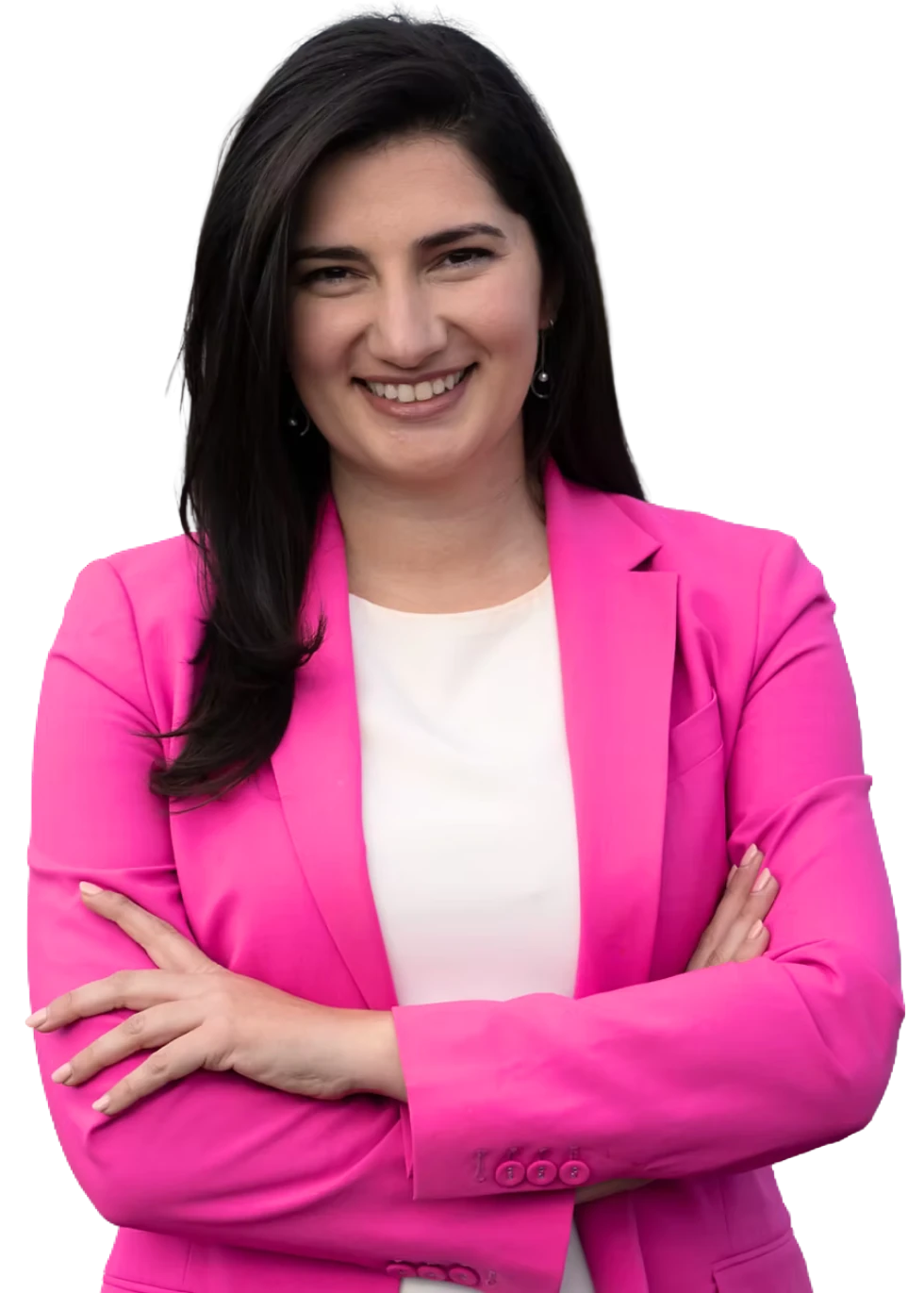
Marissa Roy is a lifelong Angeleno and civil rights attorney who has spent her career fighting for working people—families, renters, immigrants, and all Californians. She is the first citywide candidate that DSA-LA has ever endorsed, and the seat with the most individually-situated power that we have ever attempted to win.
Roy has dedicated her entire career as an attorney delivering civil rights and consumer protection litigation on behalf of local and California State governments. She's helped build landmark lawsuits against companies that exploited workers, taken on Trump in court, and even sued tech giants like Meta and won. In previous roles, she helped build cases against large employers, like trucking companies at the Port of Los Angeles and Carwash companies who were exploiting their workers. Endorsers of her campaign include: SEIU 721, Teamsters Joint Council 42, NUHW, UTLA, ILWU Southern District Council, and the LA Fed. This level of support, particularly from organized labor, for a young, democratic socialist challenger is highly unusual, and speaks to the depth of her many years of work defending workers’ rights.
Roy has been an active DSA-LA member for years, representing our chapter at national conventions and co-leading an electoral working group in the 2024 electoral cycle. Likewise, she received strong support from our chapter through the endorsement process, with 93.8% of voting members approving her endorsement.
John McKinney, is a former district attorney prosecutor, running on a slightly conservative law-and-order “compassionate accountability” platform of prosecuting crime and improving transparency. He has made his bed with Republicans for this campaign: his campaign fundraisers are Pluvious, who has hosted an event for Donald Trump this year. He’s paid $259,800 to Strategy Insights, a firm run by Matt Rexroad, a Republican strategist described as “a key adviser to Republicans, including House Minority Leader, and Speaker-in-waiting, Kevin McCarthy.” AirBnB, Rick Caruso, and other ghoulish, capitalist interests have poured money into McKinney’s campaign. He has received endorsements from right-wing LA District Attorney Nathan Hochman and the Los Angeles Police Protective League (who revoked their endorsement of sitting City Attorney Hydee Feldstein Soto after her office allowed and then allegedly covered up a data breach).
Marissa Roy is running to make sure that the powerful role of Los Angeles City Attorney protects those who need it most. She was the biggest vote-getter in the primary, and it is time to seal the deal.
Cast your vote for Marissa Roy this November.
LA City Council - District 9
Los Angeles City
TL;DR: Vote Estuardo Mazariegos for Los Angeles City Council District 9.
Estuardo Mazariegos
EndorsedDSADistrict 9
CD 9 spans parts of Los Angeles south of Downtown LA, including South Central Los Angeles, Vermont Square, Exposition Park, and the neighborhoods surrounding the Coliseum–including the city’s major World Cup and Olympic venues. It is LA’s lowest-income city council district and one of the most heavily impacted by displacement, environmental racism, unsafe streets, and chronic public underinvestment. With billions of dollars in development and global mega-events flowing through the district, this race will determine whether that wealth continues to be extracted or is redirected into housing, union jobs, and public goods for working-class residents.
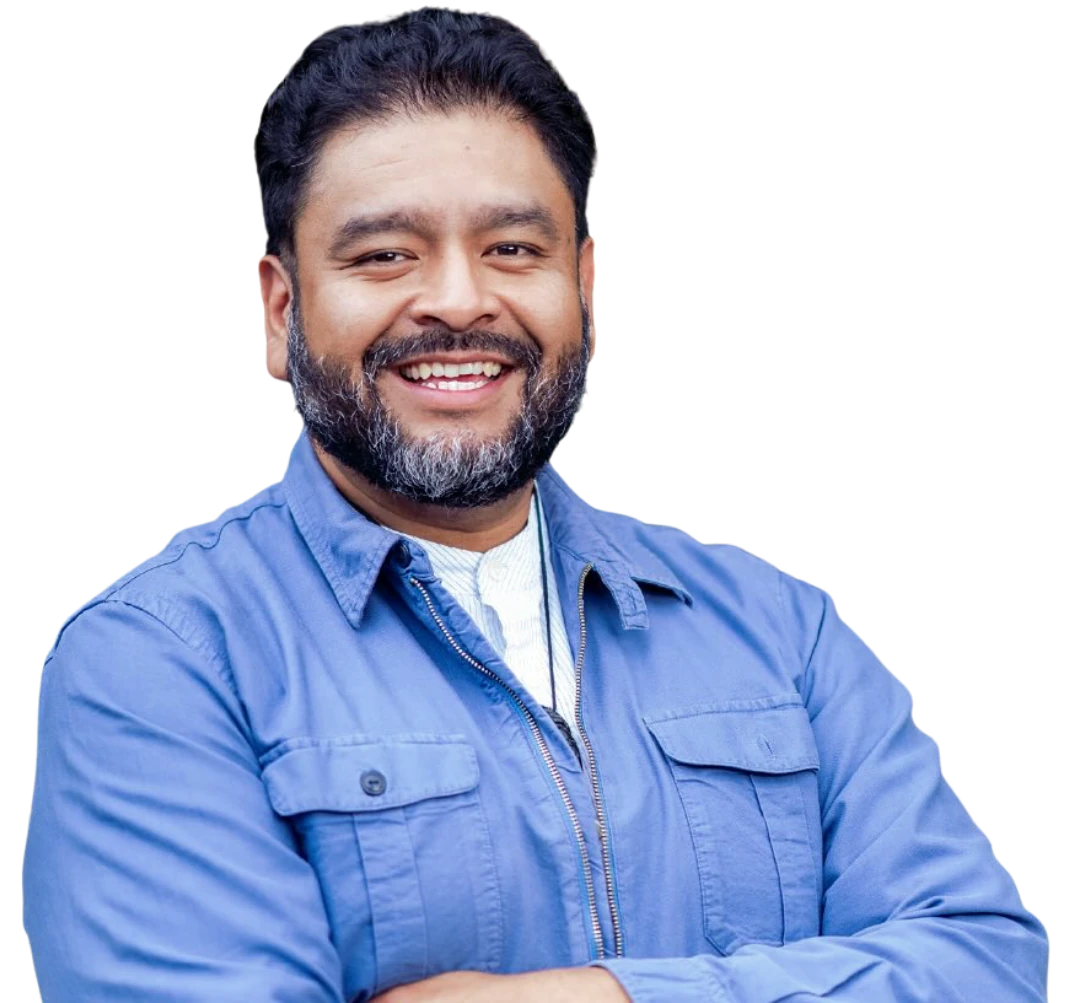
DSA-LA proudly endorses Estuardo Mazariegos for City Council District 9. Mazariegos is a longtime tenant organizer and democratic socialist, a Guatemalan immigrant who has lived in South Central from early childhood and has spent nearly two decades building working-class power in his neighborhood. A community leader, Estuardo is a co-director at the Alliance of Californians for Community Empowerment (ACCE) and leader in the tenants’ rights movement, where he helped to pass the Resident Protection Ordinance, guaranteeing the right of return and substantial relocation assistance for tenants displaced by development. Mazariegos was on the frontlines of strengthening the Tenant Anti-Harassment Ordinance (TAHO) and expanding enforcement tools against landlord abuse. He also played a key role in passing Measure ULA (the mansion tax), working with the United to House LA coalition and ensuring that revenue from the high-value real estate tax was directed to fund affordable housing and homelessness prevention. He organized alongside tourism workers against corporate giants like Delta to secure the Olympic Wage, ensuring that profits from global mega-events are shared with workers and the community instead of being used to further subsidize corporate profits. Mazarigos has supported expanding income assistance for households impacted by immigration raids and has consistently connected housing stability to immigrant defense. His platform centers socialhousing, strict enforcement of tenant protections, reinvestment of stadium and dealership revenue into community infrastructure, expansion of local hire pipelines into union jobs, and full compliance with sanctuary policies. Mazariegos’ campaign refuses corporate PAC, developer, and police association money; it is thus accountable to the grassroots donors and organized working-class institutions.
His opponent, Jose Ugarte, is the hand-picked successor to the current councilmember, Curren Price, and has served as an aide within that office. Price was indicted in 2023 on embezzlement charges, and, at the time of this writing, currently faces up to 9 years in state prison. Ugarte appears to be following in his boss’s footsteps, racking up his own ethics violation for failing to disclose $400,000 in income from his personal lobbying and consulting firm. The entirety of this income was generated by donations from campaigns and PACs in support of establishment figures like Karen Bass, Jimmy Gomez, and Tim McOsker. He has raised significant funding from the same status quo coalition of developers, business interests, and institutional players that have dominated district politics for years. His campaign messaging relies heavily on identity-based appeals, while offering little structural analysis of displacement, landlord power, or wealth extraction from the district. On key issues, his framing leans toward law-and-order politics and market-driven development strategies that have defined the current era of governance in CD9. With establishment backing and institutional fundraising networks, he is treated by insiders as a presumptive, and equally corruptible, successor.
CD 9 cannot afford another term of extraction politics that treats South Central as a site for spectacle and profit while working-class residents bear the costs. The district contains world-class venues and some of the city’s deepest inequality, putting the nauseating inequality of Los Angeles in plain view.
This race offers a clear choice between a program rooted in social housing, labor power, and democratic accountability - or one that continues an untenable status quo.
Vote Estuardo Mazariegos for Los Angeles City Council District 9.
LA City Council - District 3
Los Angeles City
TL;DR: DSA-LA recommends Barri Worth Girvan for Council District 3.
BW
Barri Worth Girvan
RecommendedDistrict 3
Los Angeles CD 3 covers much of the West San Fernando Valley, including Woodland Hills, West Hills, Tarzana, Winnetka, and Reseda. Current councilmember Bob Blumenfeld is termed out, leaving us two potential candidates to replace him: Tim Gaspar and Barri Worth Girvan.
Gaspar is Blumenfield’s chosen successor. He touts endorsements from the Los Angeles Police Protective League and many of the moderate to conservative elected representatives in the SFV. According to his website, his priorities involve “restoring law and order in every neighborhood,” supporting and expanding 41.18 encampment bans, and cutting red tape for small businesses. A self-described "entrepreneur" and founder of Gaspar Insurance, Gaspar lists donations from real estate, the Apartment Association of Greater Los Angeles, and a bevy of other donors who donate to candidates who run against DSA-LA endorsees. Gaspar and the opponents to DSA-LA’s endorsed candidates for Council District 9 and City Attorney recently participated in the sparsely attended “Los Angeles Clean & Safe Forum,” hosted by the Los Angeles Hospitality Partnership at the Los Angeles Police Museum, a true Mad Libs nightmare of an event (even featuring AI-ified headshots of the candidates on the flyer—seriously, who are these guys?).
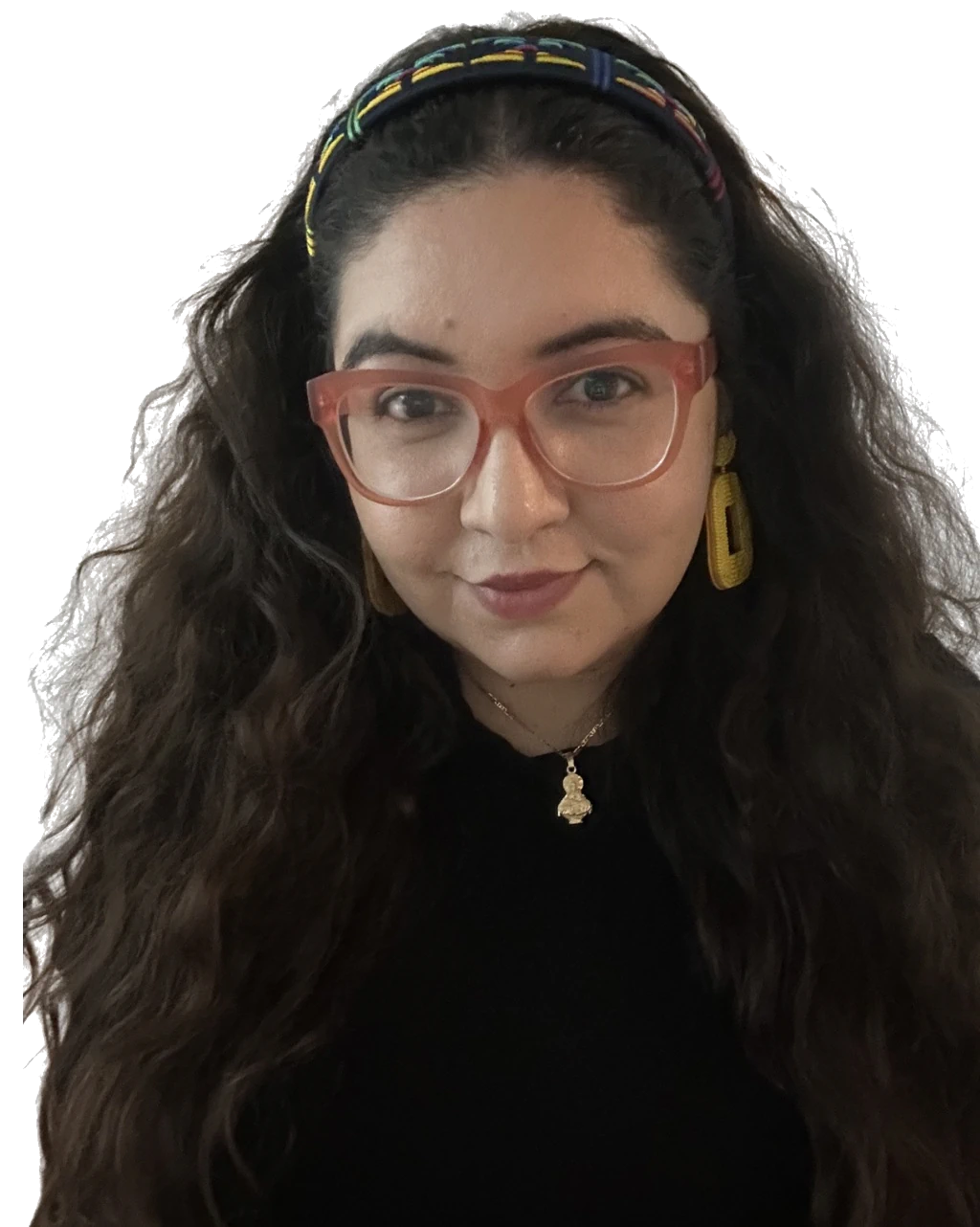
Girvan has the most labor endorsements in the race, with the LA Federation of Labor endorsement along with SEIU 721, NUHW, AFT 1521, and more. She also lists a handful of endorsements from various eras of the LA political status quo, including her old boss, Lindsay Horvath, and many within the state assembly where she used to work. While no socialist, her platform includes references to properly expanding unarmed crisis response teams, humane solutions to homelessness, including centralizing homelessness outreach and support within the city, and ensuring housing is built quickly and by transit and jobs hubs.
While Girvan is no socialist, she would be a step forward in the SFV in the face of a candidate who wants to increase policing and criminalization of homelessness.
DSA-LA recommends Barri Worth Girvan for Council District 3.
City of LA Proposition TE
Los Angeles City
TL;DR: Vote NO.
Proposition TE carves out an exemption from Measure ULA, which funds affordable housing and tenant support. The exemption covers residential properties, including apartment buildings, damaged or destroyed in the Palisades Fire. Any qualifying sale between January 7, 2025, and January 6, 2030, by whoever owned the property the day the fire started, gets a one-time exemption or refund. Refunds reach back to ULA taxes already paid.
ULA applies only to sales above an inflation-adjusted threshold. The threshold is currently $5.4 million for the 4% rate and $10.9 million for the 5.5% rate. Anyone TE helps is, by definition, selling a property worth more than $5.4 million. TE does not ask whether the property was the seller’s only home, whether they lived there, or whether they are struggling. It asks only whether the property was damaged and whether the seller owned it on January 7, 2025.
The City Administrative Officer estimates TE will cost the House LA Fund $35 million to $66 million through January 2030. The estimate is based partly on rebuilt Palisades homes already listed for sale, which means some of the benefit goes to owners who rebuilt and then sold, not only to people forced to sell burned lots. The House LA Fund pays for affordable housing production and homelessness prevention, including legal help for tenants facing eviction. The City’s Chief Legislative Analyst says TE “may lead to... a decrease of funding for affordable housing and tenant assistance programs”. In other words, the fund that pays for eviction defense and affordable housing would give up revenue so that sellers of $5.4 million-plus properties can skip the tax.
TE is backed by Mayor Karen Bass, Councilmember Traci Park, council President Marqueece Harris-Dawson, the Western States Regional Council of Carpenters, and Palisades Community Council; no formal opposition was submitted.
Fire survivors deserve to be made whole, particularly the renters displaced by the fire, for whom TE does nothing. Because of the political optics of the Palisades fires, this is almost certain to pass, but we should understand this initiative's economic impacts for what they are: an initiative to cut public funding that helps low-income Angelenos in order to lower taxes for the wealthiest homeowners affected by the fires.
Vote NO.
City of LA Charter Amendment LA
Los Angeles City
TL;DR: For us, removing restrictions on public enterprise is a major opportunity to expand what our city can directly provide for Angelenos, so vote YES on charter amendment LA.
Charter Amendment LA is a package of reforms aimed at modernizing how LA manages its money, infrastructure and public services. It would move the City toward two-year budgeting, require long-term infrastructure planning, reform the Department of Public Works,and update contracting rules.
Particularly exciting, LA's Charter currently bars the City from running purely commercial or industrial businesses unless voters approve each one at the ballot box. Amendment LA removes that requirement, clearing the way for future publicly owned alternatives to private businesses and services.
There are minor concerns about other provisions, particularly expanded authority to mortgage City property and changes to the Board of Public Works. But the amendment also gives LA tools for stronger long-term public investment and municipal ownership. Two-year budgeting cycles will also give our city government more ability to intentionally fund longer-term infrastructure projects, instead of the annual race to cover budget holes caused by LAPD overspending in order to generate better headlines.
City Controller Kenneth Mejia and Councilmembers Bob Blumenfield and Katy Yaroslavsky authored the official argument in support, and the Council, including our four socialist councilmembers in office, voted 13–0 to put the measure before voters.
(That said: wait, can you give any charter amendment whatever initials you want?)
For us, removing restrictions on public enterprise is a major opportunity to expand what our city can directly provide for Angelenos, so vote YES on charter amendment LA.
City of LA Charter Amendment PL
Los Angeles City
TL;DR: Vote yes on PL.
LA has an infamously labyrinthian planning system. We wish it was the good kind of labyrinthian, with David Bowie and Jim Henson creations. Instead, it’s the bad kind of labyrinthian (confusing).
What it does
Charter Amendment PL tries to simplify things in three ways:
One appeals body instead of seven. The City's seven Area Planning Commissions, with 35 commissioners between them, would be replaced by a single citywide Neighborhood Appeals Commission of at least seven members.
More authority for City Planning. The Planning Department would get clearer power to decide certain land-use cases itself.
No more death by inaction. Today, if a General Plan amendment has been approved by both the City Planning Commission and the Mayor and the Council doesn't act within 75 days, it is denied. Under PL, it would be approved. Supporters say the City Council should have to kill something with a vote, not by running out the clock. Former DTLA Councilmember Huizar’s infamous corruption case involved his failing to agendize plan items until their sponsors bribed him.
LA’s planning process can be painfully slow and confusing, and reducing unnecessary bureaucracy isn’t inherently bad. Area Planning Commissions matter far less than they used to. State and local changes have made many project approvals ministerial, so there is less for them to hear. The seven commissions currently have 35 commissioners in total; Measure PL would replace them with a single commission of at least 7 members. If passed, this would make small but noticeable reforms to approve new construction with fewer opportunities for municipal corruption.
The measure is supported by Charter Reform Commission chair Raymond Meza and Roy Samaan, President of the Engineers & Architects Association; no formal opposition was submitted.
Ultimately, this amendment is legitimately mostly streamlining an outdated planning process.
Vote yes on PL.
City of LA Charter Amendment PRK
Los Angeles City
TL;DR: Vote YES on Charter Amendment PRK.
Charter Amendment PRK is about LA’s parks needing money. (Get it, PaRK)
The measure would gradually double the minimum funding the City is required to provide its Department of Recreation and Parks over the next 10 years. It does not create a new tax or source of revenue; instead, it increases the share of existing City revenues guaranteed to parks under the charter. Currently, the charter requires the department to receive.0325% of the total assessed value of taxable properties in the City. Under the existing formula, that minimum is projected to grow to $303 million by 2036, PRK would instead increase it to roughly $995 million.
And they could use it. LA’s parks ranked 93rd among the nation’s 100 largest cities in the Trust for Public Land’s 2026 ParkScore and the City’s own park assessment found that LA spends about two-thirds less on parks than comparable cities. LA has more than 500 parks, 150+ recreation and senior centers and 59 pools, while the department has struggled with staffing shortages, aging facilities and a massive maintenance backlog. More guaranteed funding means more money for things like playground and bathroom repairs, park cleaning, and money for the workers keeping these places running. TheLos Angeles Police Protective League opposes the measure, arguing that guaranteed additional spending through the charter would leave the city with less flexibility to respond to future budget crises. Very thoughtful of them. Now, to take a big sip of coffee and look at how much money the city pays to bail out corrupt or abusive cops every year.
Because PRK does not create new revenue, however, the debate is ultimately over how the City prioritizes its existing resources including funding for parks relative to other departments. This amendment also has support from LAUSD’s Board of Education, who has noted that additional park funding could help expand Community School Parks. During a declared fiscal emergency, the City Council could reduce the increased funding required by this measure by up to 30% for the duration of the emergency.
Public parks are a basic public good that every Angeleno should be able to enjoy, and LA has underfunded ours for far too long. It’s unfortunate and structurally poor governance that the method by which we’re funding them is a charter reform for guaranteed funding - it would be far better if our elected councilmembers had the political courage and principles to prioritize them instead of giving LAPD a 20th helicopter.
Vote YES on Charter Amendment PRK.
City of LA Charter Amendment PRT
Los Angeles City
TL;DR: Vote YES on PRT.
Charter Amendment PRT would update how the City runs its airports, its harbor, and the Department of Water and Power. (Get it: PoRT). It would:
Increase the Airport Commission seats reserved for residents near LAX from one to at least three, and near Van Nuys from one to at least two, for a total of at least 5 local seats instead of two.
Require the Harbor Department to devote a portion of its annual operating income to waterfront public access projects.
Require applicants for certain Port leases or projects needing coastal development permits to disclose how the project would affect jobs.
Allow the Council to extend airport and LADWP leases beyond the 30-year default to as long as 66 years. Such an extension would require a finding that the longer term serves the City and a two-thirds vote of the Council. The Mayor may veto the extension, and an override requires a three-fourths vote of the Council. The Council can already approve 50-year leases for the airport and LADWP, so the change adds up to 16 more years, but the longer term requires a two-thirds vote.
For residents of neighborhoods next to LAX and Van Nuys, who live with the noise and pollution, PRT would expand their guaranteed seats on the Airport Commission from two to five. Commissioners are still appointed through the usual process, so residency alone will not guarantee that they speak for affected communities.
PRT would also require applicants for certain Port leases or coastal permits to report the expected effects on employment and the regional economy before the Port acts. Applicants would pay for these disclosures themselves. That would put job impacts on the public record, giving dockworkers, other Port workers, and the community something concrete to organize around.
However, the waterfront money would not be guaranteed at current levels. The City says PRT “codifies” the Port’s practice of putting 10% of operating income into public access projects, roughly $28.6 million a year. The Charter text requires only “a portion,” and it gives the Harbor Commission “the sole authority to determine the appropriate amount” each year. Nothing would stop the commission from going below 10%. Today, though, the Charter requires no waterfront investment at all, so PRT at least sets a floor above zero.
Even so, we believe PRT is a net gain for communities near the airports and for Port workers. It’s still mostly a technical update, and we should keep watching and organizing towards better public ownership.
Vote YES on PRT.
City of LA Charter Amendment EE
Los Angeles City
TL;DR: We’re not making a recommendation.
Charter Amendment EE combines several changes to City ethics, oversight, elections, and City Council operations On the positive side, it strengthens independent oversight bodies for LAPD and the Fire Department by allowing them to conduct audits, increases penalties for campaign finance violations, and creates a five year waiting period before ethics commissioners or the ethics commission executive director can run for city Council or LAUSD School Board Considering City Hall’s tenuous relationship with ethics over the years, we’re certainly not going to complain about stronger accountability.
EE also changes the referendum process. Currently, Angelenos seeking to overturn a City Council Action must collect signatures equal to 10% of the votes cast in the most recent mayoral election; EE would raise that to 15%, the same threshold required for a voter initiative. Supporters argue that changing a law and overturning one should require the same level of demonstrated public support. And referendum power is not inherently progressive: the most recent attempt was backed by major business interests seeking to overturn the City’s $30 minimum wage for tourism workers. That campaign, backed by airlines and hotel interests, still fell about 9,000 signatures short under the current rules.
On the other hand, referendum campaigns have only 30 days to gather signatures, compared with four months for initiative. Raising the threshold from roughly 93,000 signatures under current turnout levels to nearly 140,000 could therefore make referendums impossible for grassroots movements. On the other hand, they effectively already are impossible if you aren’t able to fund a multi-million dollar campaign.
EE also lowers the minimum number of required City Council meetings from three days a week to once a week. Council “public comment” watchdogs claim this would mean city council would spend less time “doing their jobs” and listening to the public. On the other hand, anybody who’s been to public comment knows that city council isn’t listening anyway and half the time there’s nothing valuable to listen to.
Ultimately, this is mostly a technical set of changes, some very good, some somewhat bad.
We’re not making a recommendation.
City of LA Charter Amendment SC
Los Angeles City
TL;DR: No recommendation on Charter Amendment SC.
Charter Amendment SC is mostly housekeeping. The City Charter currently has two long, nearly identical sets of campaign finance rules: one for LAUSD Board of Education candidates and one for City candidates. SC deletes the school board version and says board candidates follow the same rules as candidates for Mayor. The following rules would not cover school board candidates:
Limits on fundraising from City contractors and lobbyists.
Access to public matching funds.
These are rules that already don’t apply to LAUSD races today, but changing them in the future would require another future charter amendment. That’s timely, because a state Proposition 4 this year will make it legal for more races to use public financing rules, and there’s a chance that new movements for public election financing come for LAUSD.
Two things are changing:
LA City Council. Today, changing the school board's campaign rules takes a public votes. Under SC, the City Council could add restrictions or carve out exceptions by ordinance. That includes details the Charter currently spells out, like the rules on outside spending coordinated with a candidate and the 24-hour notice for independent expenditures of $1,000 or more. The Council could use that power well or badly.
Fewer people can sue. Today, any resident of the school district can go to court over most violations. Under the mayoral rules, only City residents and the City Attorney can. LAUSD residents in cities like Huntington Park, South Gate and West Hollywood would lose that right. Private plaintiffs would also have to go to the City Attorney first, not the Ethics Commission.
One smaller wrinkle: a catch-all court penalty would drop from $5,000 to $2,000 per violation, unless Measure EE passes, in which case the cap would raise to $15,000. See our recommendation on Charter Amendment EE.
SC tidies up the Charter and takes a little power from voters and non-City residents along the way. That isn't enough to oppose it, nor enough to cheer for it.
No recommendation on Charter Amendment SC.
City of LA Measure FD
Los Angeles City
TL;DR: No recommendation.
Measure FD proposes a half-cent sales tax increase in the City of Los Angeles, raising the total rate from 10.25% to 10.75%. The City estimates FD would raise about $345 million a year, all in a separate fund for the Los Angeles Fire Department. T
The money goes into a separate fund for firefighters and paramedics, engines and ambulances, fire stations, and brush clearance. Supporters say it could pay for at least 1,000 new firefighter and paramedic positions, and it would fund new stations, built under a union Project Labor Agreement at prevailing wages.
Measure FD attempts to protect LAFD prevent the CIty from replacing existing LAFD funding with the new revenue through a Maintenance of Effort rule. It locks in LAFD’s average share of the City’s discretionary budget over the 10 years before the tax starts as a minimum percentage that cannot be adjusted downward. If the adopted budget falls short of that share, the City loses the right to collect the tax that year.
There is no question that LAFD needs greater investment. The department has significantly fewer firefighters per capita (about 0.9 per thousand residents) than other major American cities, which generally range from 1.2-1.8 per thousand. And the 2025 Los Angeles wildfires show starkly that as climate change accelerates, the city will need to invest in far better wildfire preparedness. That’s why this measure has political support from across the ideological spectrum. It’s probably going to pass.
The only registered argument against Measure FD is that the City should fund LAFD from its existing $8 billion-plus General Fund rather than a new tax. We agree in principle. However, the only organized opposition making that argument is the Howard Jarvis Taxpayers Association, who propose paying for LAFD by cutting homelessness services and are generally among the Worst Organizations In the United States. We reject the premise that Angelenos should have to choose between adequately funding emergency services and providing services to unhoused residents.
But we’d be remiss if we didn’t register our concerns. Sales taxes are regressive, requiring lower income households to pay a larger share compared to wealthier households. And FD would permanently increase that burden without exhausting more progressive revenue options: because Prop 13 prevents us from utilizing other revenue options like property taxes and prioritizing LAFD in the annual budget might threaten the ability of Los Angeles Police Department officers to play Candy Crush while collective overtime. A full 40% of Los Angeles’ annual budget is already made up of over 600 different restricted “special funds”, authorized by mishmash taxes just like this one
Another regressive sales tax might be necessary for crucial services. But it’s typical of the post-Prop-13 status quo to keep coming back to sales taxes instead of taking on the urgent class conflict we need to tax the rich.
No recommendation.
🗳️ Los Angeles County5 races
🗳️ Los Angeles County
State Board of Equalization - District 3
Los Angeles County
TL;DR: Vote Sam Sukaton for State Board of Equalization.
SS
Sam Sukaton
RecommendedDSADistrict 3
The low-visibility, low-voltage, countywide California State Board of Equalization (the recently-defanged state tax commission) is one of the few Dem-on-Dem races coming out of the June primary. The California State Board of Equalization (BOE) is the only elected tax board in the US. We Californians love voting for things, especially when they’re very esoteric to voters. Before 2017, the BOE had far more responsibilities, but due to mismanagement of millions of dollars of funds and political corruption, Governor Jerry Brown and the California Legislature stripped the BOE of most of what it was tasked to do. Now, it primarily administers taxes and audits state-assessed properties. The BOE has four elected districts—District 3 covers all of Los Angeles County.
Democratic socialist and higher education labor organizer Sam Sukaton beat a field of ten, including a self-funded millionaire and a former Assemblymember to face Gipson in November.
Measure A is a County Charter amendment covering 14 public safety bargaining units. The covered workers include firefighters, deputy sheriffs, DA investigators, deputy medical examiners, lifeguards, their supervisors, and nonadministrative civilian workers in the Fire, Sheriff’s, and Medical Examiner departments. It does four main things:
Bans strikes. Any covered worker who willfully joins an illegal strike or work stoppage could face discipline up to and including firing. This sounds really bad but actually most of the units covered are already banned from striking as public safety workers. But it adds two new building trades units and bans them from striking. So it is bad, just a little less bad than it sounds.
Replaces bargaining deadlocks with binding arbitration. When contract renewal talks stall, a three-member panel decides. The County and the union each appoint one member, and the two sides select a neutral chair. The panel picks one side’s final offer on each issue.
Makes awards binding without a vote. Once an award is final, “no other actions by the Board of Supervisors or by the electorate” to confirm or approve it are permitted.
Freezes current terms. Existing wages and conditions stay in place until a deal or award is reached, so the County cannot impose a contract.
Measure A would affect covered workers differently. For sworn sheriff deputies and firefighters, who are already prohibited from striking, binding arbitration would provide a new tool when negotiations reach impasse. Rather than allowing the county to ultimately impose its final offer, unresolved issues would go to a neutral arbitration panel. If you’re already banned from striking, that can help workers get better contracts than they would otherwise.
But this measure was not built around lifeguards. The deputy sheriffs' union, ALADS, is its largest funder at more than $2 million, and it represents more than 8,000 deputies. ALADS has been without a salary contract since January 2025 and is bargaining with the County right now. The board subsequently voted to place its own measure on the November ballot.
That creates broader fiscal concerns. County officials have warned that arbitration awards not tied to the county’s budget policies or financial projections could strain reserves and limit its ability to fund other priorities particularly as the county faces increased fiscal pressures from federal healthcare cuts, wildfire recovery, and major legal settlements. When combined with the fact that the relevant union currently negotiating with the county is that for County Sheriffs– a notoriously corrupt “law enforcement” agency– it looks even worse.
Further, for covered civilian and non-sworn officers who currently retain a legal right to strike, the measure would take away that right. Binding arbitration can sometimes help workers, but as socialists we should always prioritize the right and power that comes from organizing collectively as workers to strike.
In 2020, voters approved Measure J, requiring at least 10% of the County’s locally generated unrestricted revenue to support community investments and alternatives to incarceration, including housing, mental health treatment, and diversion programs. Measure J prohibits those funds from being spent on prisons, jails, or law enforcement agencies. Measure J’s passage was one of the only material victories of the George Floyd uprisings in Los Angeles public policy, and the campaign to pass it helped launch the campaigns of both Assemblymember Isaac Bryan and democratic socialist City Councilmember Eunisses Hernandez.
Restoring Measure J by passing Measure E is not only correct from a bureaucratic measure-G-wasn’t-supposed-to-repeal-anything embarrassing amateurish “correctness” reason. It’s also a legitimately important, redistributive, anti-carceral initiative.
Vote yes.
LA County Superior Court Judge
Los Angeles County
TL;DR:Following our friends at La Defensa, we recommend voting for:
Rhonda Haymon for Office No. 64
No recommendation for Office No. 65
No recommendation for Office No. 87
David Ross for Office No. 131
RH
Rhonda Haymon
Recommended
Recommendation Source: La Defensa
DR
David Ross
Recommended
Recommendation Source: La Defensa
This voter guide is all about judging who to vote for. Now we’ve got to judge the judges!
Voting for judges is difficult. Voters generally have no meaningful way to evaluate which candidates are good or bad, seats frequently go uncontested, and the people who get elected are typically well-off prosecutors who’ve spent their careers putting poorer working-class plaintiffs in jail for minor offenses. While there are some sites for public review, there is overall little public information about judges because these are non-partisan races and campaigns rarely fundraise or campaign significantly. Once seated, incumbents who file for reelection without a challenger automatically begin a new term without appearing on the ballot. Not super democratic.
Fortunately, there are movement organizations stepping out to fill the void of information and try to wield these elections to push our punitive justice system to be, well, a little less punitive. This year, we’re going to rely on the guidance from La Defensa, a Los Angeles-based abolitionist and judicial accountability organization founded by our very own Socialist-in-Office Eunisses Hernandez. La Defensa conducts one of the most rigorous and value-driven judicial evaluation processes in the county. Their work centers identifying candidates who will reduce the harms of incarceration and bring greater humanity to the bench.
You can find their recommendations in green below reflecting those recommended or endorsed by La Defensa’s judicial evaluation process, and you can follow the link to their guide (here) for a full analysis based on their in depth process, which includes questionnaires and interviews.
Following our friends at La Defensa, we recommend voting for:
Rhonda Haymon for Office No. 64
No recommendation for Office No. 65
No recommendation for Office No. 87
David Ross for Office No. 131
County Sheriff
Los Angeles County
TL;DR: Villanueva is comically evil, and while he keeps running and somehow making the runoff, he’ll keep losing. Don’t vote for Villanueva.
AV
Alex Villanueva
Opposed
We’ve said it every voter guide: there are no good cops and even fewer good sheriffs.
But we’re going to give you our analysis anyway.
Incumbent Sheriff Robert Luna has institutional backing with endorsements from all 5 LA County Supervisors, Mayor Karen Bass, Senator Alex Padilla, and other state and local elected officials, as well as LA County Federation of Labor. His campaign is running on a couple major headlines: violent crime falling every year during his term and homicides down 25% since 2023. He’s responsible for increased law enforcement on the Metro system and instituting body-worn cameras in jails. In 2024, he announced the creation of the office of constitutional policing as part of his policy to formally ban deputy gangs, which he ran on in 2022. Critics question whether this has been successful.
Luna faces disgraced former Sheriff Alex Villanueva (he’s baaaaaaaack… again), whom he unseated in 2022. Villanueva is running under the banner "Rescue, Rebuild, Restore” and a law and order approach pointing to departmental dysfunction and emphasizing his record on clearing homeless encampments. We could list another 100 terrifying anecdotes, but let’s spin the WHEEL OF CONDEMNING VILLANUEVA FACTS and see what gives us. We’ll be back in a second.
We’re an entirely member-run and member-driven organization, and a lot of the elections for these smaller cities are hard to research. If you’re a DSA member living in a smaller non-LA city and would like to help us write about your city’s election now or in the future, reach out to us at electoral@dsa-la.org.
There are lots of political questions about Santa Clarita. For example, why does it not wrest Six Flags away from unincorporated Los Angeles as its own? Another question was “why is their City Council entirely filled with at-large representatives?” That first question has yet to be satisfactorily answered, the second query has been addressed. Following the successful 2022 Voting Rights Act lawsuit, and a lengthy district mapping process, the 2026 city council elections will be the first time Santa Clarita’s city council is elected via representational districts.
Councilmembers Bill Miranda (first elected in 2017) and Marsha McClean (first elected in 2002) are retiring from the office. Mayor Laurene West (first elected in 1998) is running for District 4. Many candidates running in Santa Clarita are explicitly Moms for Liberty curated and endorsed candidates. Those that aren’t are still parts of more extreme factions of the Republican party.
This district serves all of Santa Clarita’s public high school students, and most of its junior high school students. It’s named after a famous silent-film star.
Santa Clarita City Council - District 2
Santa Clarita
TL;DR: Vote for Brett Haddoak.
BH
Brett Haddoak
RecommendedDistrict 2
Brett Haddoak’s platform aligns with several DSA priorities, and his support for active issues like the local de-Flock effort is well received by many. A 3rd generation Santa Claritian, Brett has called Santa Clarita home his entire life. His wife is a member of the board for the Newhall Unified School District as well. This paired with his professional expertise as a software engineer and his experiences volunteering with Bridge for Homes, the primary homeless services provider in SCV, has given him an incredible insight into how to implement real change in Santa Clarita.
Brett’s priorities for the city are served with a healthy dose of reality: Santa Clarita is the 3rd largest city in LA now, and it’s time its city council starts acting like it. Brett has a large focus on housing and homelessness. On housing, he has plans to build varied housing options that incorporate public transit expansions while maintaining
environmental resilience and strengthening disaster prevention and preparedness. On homelessness, he understands the largest current barrier is reliable city support, and would work to implement lasting budgetary stability that can outlast him. Unlike the current council members, Brett understands modern technology for all its benefits and its risks. He has been a vocal anti-Flock candidate since the beginning of his campaign, while also being an advocate for much needed modernization to the city’s technological suite and civil resources and the jobs that modernization can create. Most important to residents, Brett plans to build a f***ing hospital.
By contrast, his opponents Gloria Mercado-Fortine and Denise Lite have both found themselves repeatedly tied up in various controversies across their careers in public service. Both speak enthusiastically about their commitment to public safety (read: commitment to empower the sheriffs department to the fullest extent). Neither have much more of a position or policy plan except the platitudes of ‘accountability, transparency, expertise.’
Santa Claritans should support the progressive choice in this race.
Vote for Brett Haddoak.
Santa Clarita City Council - District 4
Santa Clarita
TL;DR: Vote for Valerie Bradford.
VB
Valerie Bradford
RecommendedDistrict 4
Four of the five candidates (Peter Yahiayan, Jeffrey Berman, Valerie Bradford, and Nick Somers) in this race are running on very similar platforms: transparency, public infrastructure, public safety, and traffic.
Valerie Bradford takes these focuses a step further than the rest: environmental stewardship in the SCV’s drought prone region, systemic and dignified intervention on homelessness, real affordable housing for renters and home buyers alike, and job creation and retention. Valerie has been a long time community volunteer and non-profit founder, and is the only candidate who has had direct experience working in this community. She has made a concerted effort to work with young people to ensure their needs are being met at a time, where she sees fewer and fewer opportunities available to them and is the only candidate to be endorsed by youth groups, labor unions, and environmental clubs.
The fifth candidate, incumbent Mayor Laurene West, seems to have no interest in actually winning this seat, or maybe a brazen confidence that it is guaranteed to her. Either way, we can’t find any campaign efforts or voter outreach Laurene has done this election season. That leaves voters with only her record while in office, racially discriminatory legislation and indifference to her constituents' concerns in favor of sheriff expansion and her growing her own property values.
Vote for Valerie Bradford.
Santa Clarita City Council - District 5
Santa Clarita
TL;DR: But over a landlord, we recommend a vote for Dr. Kelvin Driscoll.
KD
Kelvin Driscoll
RecommendedDistrict 5
Predominantly covering Canyon Country and Sand Canyon, the new District 5 of Santa Clarita is the area of Santa Clarita that has been most neglected. Often called the ‘bad part of town’, this area is the most diverse area of Santa Clarita and has a larger population of renters than other areas. In this race is Dr. Kelvin Driscoll, a non-profit leader with over a decade of experience in social services and child welfare, or realtor Bob Khalsa, a landlord with a record some might describe as slummy.
Their priorities for the area align with their backgrounds, with Khalsa prioritizing housing developments with good resale valuations and Driscoll prioritizing infrastructure developments that make for a stronger community. It is important to note, Driscoll does appear to be a fan of A.I., though his views on it and A.I. infrastructure/expansion are unknown.
But over a landlord, we recommend a vote for Dr. Kelvin Driscoll.
William S. Hart Union School District Board - Trustee Area 2
Santa Clarita
TL;DR: Protect public schools, vote for Julee Brooks.
JB
Julee Brooks
RecommendedDistrict 2
Bryan Biggers is a Moms for Liberty selected candidate who has homeschooled his children until August of this year, when he enrolled two of his children into Hart District. We are sure that is unrelated to his slogan “Hart Grad, Hart Dad.”
Julee Brooks, a mother of a Hart District student who did not just enroll this year, and CEO of an extended learning non-profit across Los Angeles, has common sense priorities: supporting teachers, accessible and special education funding, proper resource allocation, parental involvement, and student safety. This has made Julee Brooks quite a controversial candidate for some local parents who do not support her anti-ICE and pro-trans perspectives. She is endorsed by many local educators, teachers unions, and high school youth groups across the district.
Protect public schools, vote for Julee Brooks.
William S. Hart Union School District Board - Trustee Area 5
Santa Clarita
TL;DR: We recommend you vote for Stacy Fortner.
SF
Stacy Fortner
RecommendedDistrict 5
Incumbent Joe Messina has been on the school board since 2009. An author of “Ramblings of a Right Wing Bible Thumping White Guys” and host of the daily radio show “The Joe Messina Show,” he has been open about his beliefs to those who will listen. He believes every meeting should start with a prayer, wants to ban critical race theory, opposes vaccinations and wants a school policy to forcibly out queer students…really a caricature of a conservative nut.
Stacy Fortner has been a community advocate across Santa Clarita and Hart schools for years. She has a strong focus on the long term challenges facing the district and has been an outspoken supporter of the vulnerable students being targeted by the current board’s tactics. Multiple people have run against Joe Messina and have lost due to low voter turnout and Joe’s extensive campaign funds. With the extensive outreach projected this year, there is a real chance to materially change
the shape of the district.
We recommend you vote for Stacy Fortner.
Saugus Union School District Board
Santa Clarita
TL;DR: Stand with our teachers and public schools and vote for Larry Grable for Trustee Area 1, Alisa Gentry for Trustee Area 2, and Chris Turnkey for Trustee Area 5.
LG
Larry Grable
Recommended
AG
Alisa Gentry
Recommended
CT
Chris Turnkey
Recommended
This school district serves students in the neighborhoods of Saugus, Valencia, and Canyon Country. We have two fun facts for you.
Fun fact #1: The neighborhood of Saugus is named after Saugus, Massachusetts.
Fun fact #2: Saugus, Massachusetts has a giant orange dinosaur overlooking US Route 1 going in and out of Boston. (Get it? Dino-Saugus?) So we are forced to ask: why is Santa Clarita’s Saugus not upping the ante with an even larger dinosaur?
While our recommendations are all standard centrist Democrats running for a school board, their opponents are all curated Moms for Liberty candidates hiding their radical positions behind student first/”transparent leadership” platforms.
Stand with our teachers and public schools and vote for Larry Grable for Trustee Area 1, Alisa Gentry for Trustee Area 2, and Chris Turnkey for Trustee Area 5.
Santa Clarita Valley Water Agency Board
Santa Clarita
TL;DR: Vote for a voice who puts people over profits, vote for Noah Ropp.
NR
Noah Ropp
Recommended
In Santa Clarita, the Water Agency has immense power, including over housing and infrastructure developments.
One of those candidates is democratic socialist Noah Ropp. Noah has an impressive record of environmental organization, and currently works for the Food & Water Watch nonprofit serving the area. Noah tells us he’ll “be a tireless voice on the water board fighting for folks to be able to trust what comes out of their tap, to afford their tap whenever they need, and to preserve water access for future generations.”
Incumbent Bill Cooper has served across the water district for over 40 years, and been on the Water Agency for almost 10. By his own website, he doesn’t believe the water board has authority to handle the things it handles. He has worked repeatedly to support the interests of developers at the detriment of our watershed.
Vote for a voice who puts people over profits, vote for Noah Ropp.
🏘️ Lynwood1 race
🏘️ Lynwood
Lynwood City Council
Lynwood
TL;DR: Vote for Team Better Lynwood.
JM
Juan Muñoz-Guevara
Recommended
MW
Mishaun Watkins
Recommended
EA
Emiliano Arellano
Recommended
Lynwood has many things to be proud of. One of those things is fostering a young Weird Al Yankovic. For that, we are all grateful. Go give Straight Outta Lynwood a re-listen.
Lynwood also has a non-weird City Council, consisting of five-members who are all elected at-large, meaning all voters citywide vote for all open council seats. Three seats are up for election in 2026, each carrying a four-year term.
The so-called “Team Lynwood” slate (Mayor Gabriela Camacho, Council Member Luis Cuellar, and Alfonso Morales) and their families have held office for more than 50 years combined, and they have endorsed or campaigned alongside former Mayor Jorge Casanova, who has spread anti-trans Moms for Liberty content.
Camacho stalled Lynwood’s sanctuary ordinance for seven months and opposes rent control. Cuellar was appointed to the council after losing at the ballot box, then celebrated a JD Vance speech attacking sanctuary cities as his "Highlight of the Day." Morales has spent 21 years on the school board. Under his watch, Lynwood schools are slated to close, teachers nearly went on strike, and student achievement sits below state benchmarks. He moved to install a former Republican Party delegate on the board over a colleague's objection to "putting money or politics over students," and he campaigned alongside Casanova in 2024.
To oppose this slate, a counter-slate led by incumbent and UNITE HERE Local 11 organizer Juan Muñoz-Guevara is styling themselves as “Team Better Lynwood.” Juan Muñoz-Guevara, Mishaun Watkins, and Emiliano Arellano are backed by nurses, healthcare workers, UNITE HERE Local 11, the Los Angeles labor federation, and the Working Families Party. They are prioritizing non-police emergency responses, affordable housing, ethics reforms, and protections for immigrants.
Vote for Team Better Lynwood.
🏘️ Huntington Park1 race
🏘️ Huntington Park
Huntington Park is an independent city in South East, Los Angeles County. For the month of October, it is known as HAUNTington Park. (Editor’s note: fact check this, figure out where creepy cackling is coming from.)
Huntington Park City Council
Huntington Park
TL;DR: There’s not a lot of good choices, so you should enthusiastically vote Nancy Martiz for District 2 and less-enthusiastically vote Valentin Amezquita for District 4.
NM
Nancy Martiz
Recommended
VA
Valentin Amezquita
Recommended
Huntington Park has five City Council Seats with four-year terms and is transitioning from at large to district-based elections beginning in 2026. Three seats are up this cycle under the new district lines, which puts both the makeup of the council and its current progressive majority at stake.
First, the pool:
You can’t understand this council race without it. And no, we don’t mean the pool of candidates. We mean a public swimming pool. In 2019, the council approved a roughly $24 million aquatic center at Salt Lake Park and handed the job to a contractor without competitive bidding. Candidates Karina Macias and Graciela Ortiz were both on that council. Seven years and about $14 million later, there is no pool. The city has a fenced-off lot, a football field, and roughly $6.4 million unaccounted for. The council cancelled the project in 2025. The LA County District Attorney has been investigating where the money went since 2022, under the name "Operation Dirty Pond." In February 2025, DA investigators searched 11 locations, including City Hall and the homes of Macias, Ortiz, the city manager, and the contractor's owners. No charges have been announced.
Now, the pool (of candidates):
Ortiz and Macias (“the Alleged Embezzlers”) are now running on a slate to retake a majority along with Celia Rivas, the CEO of an insurance company. Macias is running against fellow incumbent Nancy Martiz in District 2 for a fourth term on council, while Ortiz left the council in 2022 in an unsuccessful bid for LAUSD school board against socialist in office Karla Griego. The three are all tied into local networks of corporate-friendly Democrats.
Nancy Martiz, who currently serves by appointment, is seeking election to what is now District 2. During her term, Martiz prioritized bringing term limits to the city, working with environmental justice partners, passing a sanctuary city ordinance, strengthening housing stability, and advocating for the safest design of the rail to river connection. She is endorsed by the Working Families Party and Huntington Park Mayor Eddie Martinez, with whom she forms a fragile progressive majority.
That majority is theoretically rounded out by Arturo Flores, who is facing Rivas for District 5. Earlier this year though, Flores faced public allegations of sexual assault and harrasment, though prosecutors declined to file charges. He also faced a recall attempt, which he has referred to as retaliation for his effort to investigate said $25 million dollar pool project.
The allegations have now become an issue in the current campaign as well. An ad from forces aligned with Graciela Ortiz's slate features the woman's account and paints Martiz as standing by Flores. The woman has since said publicly that she doesn't know Martiz and wasn’t aware of the ad’s political impacts, which are misleading anyway: Martiz seconded the censure motion against Flores and voted for it. Nasty business.
The final candidate in the race, facing Graciela Ortiz for District 4, is former councilmember Valentin Amezquita. Amezquita has been a critic of the HP Council ever since he left it in 2017, regularly questioning council decisions on various high-budget public contracts. Clearly, with good reason. In 2016, he was an FBI informant on another public corruption case involving a tow company that was bribing councilmembers. He hasn’t really been raising money for his campaign and seems likely to be steamrolled by Graciela Ortiz, but he’s still better than her.
Overall, governance in Huntington Park makes a pretty good case that we have too many small independent cities in Los Angeles county and could afford to consolidate.
There’s not a lot of good choices, so you should enthusiastically vote Nancy Martiz for District 2 and less-enthusiastically vote Valentin Amezquita for District 4.
🏘️ Cudahy1 race
🏘️ Cudahy
Cudahy City Council
Cudahy
TL;DR: Following UNITE HERE Local 11, we recommend you vote for the two Cynthias, Gonzalez and Romo.
CG
Cynthia Gonzalez
Recommended
CR
Cynthia Romo
Recommended
All 1.23 square miles of the city of Cudahy is governed by a five member city council, who are all members elected at large. Five candidates qualified to compete for the three open seats this cycle: incumbent mayor Cynthia Gonzalez, incumbent councilmember Martin U. Fuentes, Cynthia Romo, Richard Corvera-Hernandez, and Former Councilmember Jose R. Gonzalez. The third seat is open, as councilmember Elizabeth Alcantar is not seeking another term.
The current council has enacted tenant protections, including a rent stabilization ordinance that caps annual increases for covered units at the lower of 3% or inflation, along with Just Cause eviction protections. Cudahy voters also approved a three term limit for council members in 2024, replacing the city’s previous lack of term limits. Winners will join Daisy Lomeli and Amanda Gomez on the council.
We are not recommending that you use your remaining third vote on any of the remaining three candidates. Incumbent Martin Fuentes, who was elected in 2022, was formally censured by the City Council in March 2026 for findings involving violations of the city’s code of ethics. The specific allegations have not been made public. Fuentes also abstained on a ceasefireresolution, which was particularly significant when Cudahy was the first city in Southern California to pass a ceasefire just one month after the war began.
Richard Corvera-Hernandez has no visible digital footprint. Jose Gonzalez was on the Cudahy council previously, and serves as Chief Technical Officer for the Los Angeles County Office of Education. He also has little about his campaign online, other than his LinkedIn, at which he regularly reposts content about “AI and Innovation”
Cynthia Gonzalez is an educator and incumbent councilmember first elected in 2022 and currently serving as mayor. Since taking office, Cynthia has advanced policies aligned with DSA priorities including pushing a community based approach to public safety with a focus on prevention and connecting communities with basic needs and strengthening sanctuary protections for immigrant residents. Gonzalez is endorsed by the Working Families Party and UNITE HERE Local 11, LAUSD school board members and DSA-LA Socialists in Office, Karla Griego and Rocio Rivas, as well as a number of South East Los Angeles based elected officials and state legislators. Cynthia Romo works as PACE Outreach and Marketing Regional Director at AltaMed Health Services according to LinkedIn. While she does not have a website we could easily find, her Instagram page suggests she is endorsed by UNITE HERE Local 11, the LA Federation of Labor. The two are running together on a slate.
Following UNITE HERE Local 11, we recommend you vote for the two Cynthias, Gonzalez and Romo.
🏘️ West Hollywood1 race
🏘️ West Hollywood
West Hollywood City Council
West Hollywood
TL;DR: Vote for Stephen Post, Chelsea Byers, and Helen Krieger
Speaking of political figures in West Hollywood, the city of WeHo is governed by a five member City Council, with members elected at large, rather than by district. Three of the five council seats are up for election in November and members serve four year terms. There are a grand total of 14 candidates running.
Despite West Hollywood's reputation for progressivism, its governing record has failed to keep pace. The city has built a national profile on LGBTQ+ acceptance, but its policy on policing, housing, and affordability has stayed well to the right of that image. It is also currently at the leading edge of a charter-city experiment of combining Flock camera surveillance with (infamously gang-infested) County Sheriff's Department enforcement — which, if it succeeds in West Hollywood, could become a template for the rest of the county.
DSA-LA endorsed Stephen Post for West Hollywood City Council. Stephen is running openly as a democratic socialist and has real support on the progressive edge of WeHo's existing government. His background is in municipal governance, and his record in criminal justice work lines up closely with DSA's positions on policing. Post is a renter, nonprofit leader, criminal justice reform advocate, business improvement district manager for underinvested neighborhoods, and current Vice Chair of the West Hollywood Public Safety Commission. His campaign centers West Hollywood as a strategic opportunity for DSA to contest policing, surveillance, housing, and affordability policy in a city whose progressive reputation has not always matched its governing record.
Public safety and surveillance are central to the race. West Hollywood has expanded its use of Flock cameras and Sheriff's Department enforcement, making the city an important local battleground over the use of automated surveillance technology. In alignment with DSA-LA’s “Smash Tech Fascism” priority campaign, Post has opposed expanding Flock surveillance and LASD drone surveillance. He supports a care-first approach to homelessness, the Security Ambassador program, emergency preparedness, and community-based public safety.
On housing, he supports freezing or capping the rent for stabilized units, stronger tenant protections, affordable and community-owned housing, community land trusts, and additional multifamily housing, particularly near transit. He has also pointed to his work as a Columbus-area Planning Commissioner, where he fought to preserve approximately 100 affordable units serving mostly immigrant families.
He supported the WeHo 2040 Strategic Plan as an action team member helping gather info about what residents spent more than seven years with the Last Prisoner Project helping seal tens of thousands of records in California, previously represented more than 13,000 graduate students as President of Ohio State’s Council of Graduate Students barred from unionizing, and led a park levy campaign securing millions in annual public parks funding. In Los Angeles, he now works on neighborhood infrastructure, climate resiliency, clean streets, and small-business support.
While Stephen is the only democratic socialist in the race, there are two other candidates running that we recommend you support: Chelsea Byers and Helen Krieger. Both are endorsed by the Working Families Party, the County Federation of Labor, and UNITE HERE Local 11. Byers is an incumbent and leading progressive on the council. She’s expected to handily win reelection and savvy observers project her to continue her political career, following the model of Lindsey Horvath. Helen Krieger is a TV writer running on a platform of safe streets, bike lanes, and building more housing. Krieger was the focus of a mini-scandal this summer stirred up by conservative opponent Larry Block, who accused Krieger of being funded by a gun company that contracts with ICE. Helen revealed in interviews a familiar story: her MAGA parents do not support her politics but do want to support their daughter.
Do NOT support:
Jonthan Cottrell is a corporate tech chamber-style candidate backed by old guard like Heilman who has run the city for 42 years, but is progressive only as it serves him and his corporate interests.
John Duran is a former councilmember seeking to return to City Hall after leaving office following a settled sexual-harassment lawsuit involving a former City Hall employee.
Larry Block and Kyle Brazel are also running as self-funded candidates and are running conservative campaigns against affordable housing and to increase police funding.
Joe Zalvidar is the CEO of a fitness club who wants to “fix the parking crisis”
Kody Christiansen is a member of the WeHo Chamber of Commerce.
Tatyana “Tanya” Tsikanovsky, a podcaster known as “highlyjewish” and advisor to the “Combat Antisemitism Movement” who complained at a candidate forum that she once witnessed a discussion panel that had an anti-Zionist speaker without a Zionist speaker to provide both sides.
There’s a bunch of other minor candidates running, many of which don’t have public websites.
Vote for Stephen Post, Chelsea Byers, and Helen Krieger
🏘️ Alhambra2 races
🏘️ Alhambra
Alhambra has a five member council elected by district, as opposed to at large seats, following the recent voter approved Measure V in 2020.
Three council seats are on the ballot in 2026: District 1 featuring Amy Wong and Ron Sahu; Vice Mayor Ross Maza unopposed in District 2; and District 5 as a three-way race between incumbent Mayor Adele Andrade-Stadler, Alejandro Covarrubias and Melissa Michelson. In 2026, the city updated its zoning code to prohibit new data centers citywide and the council voted to place Measure DB on the November ballot asking voters to make the ban permanent.
Alhambra City Council - District 1
Alhambra
TL;DR: Vote for Amy Wong.
AW
Amy Wong
RecommendedDistrict 1
Amy Wong has spent the last decade organizing across the San Gabriel Valley on environmental justice and sustainability, housing, transportation, immigrant rights, public health, and civic engagement.
Through organizations like Active SGV, Nature for all, and SGV Progressive Action, which she co-founded during the COVID-19 Pandemic, she has organized mutual aid and know your rights efforts, mobilized residents against anti-asian hate, and most recently helped lead the campaign to place a ballot measure on the November ballot that would permanently ban data centers citywide. She is also the co-founder of Matajilla Collective, an independent bookstore and community gathering space centered on the diversity of the SGV. She works at the South Coast Air Quality Management District, currently serves on Alhambra's Historic Preservation Commission and previously served on the Environmental Sustainability Commission. She is running on housing access, community safety, and more responsive city government.
Her opponent, Ron Sahu is a longtime Alhambra resident, environmental engineer with a PhD from Caltech, and former Planning and Environmental Sustainability Commissioner. Sahu initially withdrew from the race citing personal reasons, but re-entered and qualified for the ballot after incumbent councilmember Katherine Lee decided not to seek a third term. On Housing, Wong supports expanding housing options at all income levels and adding housing along transit corridors, while Sahu’s platform takes a more cautious approach to growth emphasizing limits on high density development and protecting neighborhood character. On public safety, there isn’t much on his platform but he is endorsed by the Alhambra Police Officers Association. Wong’s platform, by contrast, calls for expanding mental health crisis response and police accountability alongside public safety.
Wong has endorsements from Judy Chu, Assemblymember Mike Fong, Alhambra Mayor Adele Andrade-Stadler and several Alhambra Unified School Board Members in addition to labor and organizational endorsements like SEIU 2015, National Union of Healthcare Workers (NUHW), Alhambra Teachers Association, Sierra Club, the LA County Democratic Party and Asian Democrats of Los Angeles County. Wong brings a strong record of grassroots organizing and community centered vision for Alhambra.
Vote for Amy Wong.
Alhambra City Council - District 5
Alhambra
TL;DR: Vote Melissa Michelson.
MM
Melissa Michelson
RecommendedDistrict 5
District 5 is a three way race between incumbent Adele Andrade Stadler, community advocate and college professor Melissa Michelson, and commercial plumber Alejandro Covarubias. Andrade Stadler has served on the council for nearly 8 years, elected first in 2018. She was the first Latina to serve as mayor of Alhambra,running on her record of expanding affordable housing opportunities, creating jobs, and making her community “safer and more sustainable.” She told Around Alhambra that she supports bringing workforce housing including for teachers and firefighters and converting surplus land, vacant commercial properties, malls and underused church owned land into housing. Covarrubias doesn’t have much of a visible campaign platform so it’s difficult to place his positions or endorsements. Melissa Michelson is a community college professional, longtime Alhambra resident, and 2016 Berniecrat who has been active in neighborhood preservation, housing, and local government accountability. She helped organize the Measure V campaign which established campaign finance reforms and district elections in Alhambra. She has support from some progressive groups like Stonewall Democratic club and East Area Progressive Democrats. She’s been a part of recent ICE OUT protests and community organizing in the city.
Vote Melissa Michelson.
🏘️ Monterey Park1 race
🏘️ Monterey Park
Monterey Park City Council - District 5
Monterey Park
TL;DR: Vote Steven Kung for District 5.
SK
Steven Kung
RecommendedDistrict 5
This April, Monterey Park became the first city in California to ban data centers within its limits. Great job, Monterey Park! Keep up that energy.
The city of Monterey Park has a five-member City Council elected by district, with Districts 1 and 5 up in 2026. District 1 Councilmember Thomas Wong is running unopposed, while District 5 incumbent Vinh Ngo faces community organizer Steven Kung.
Kung is a co-founder of No Data Center Monterey Park and emerged as a leader in the grassroots fight against a proposed hyperscale data center near his neighborhood. Working with residents and SGV Progressive Action, organizers held multilingual teach-ins, canvassed neighborhoods and built a petition campaign that drew thousands of signatures. The organization helped secure a city moratorium within weeks and ultimately contributed to Measure NDC, which permanently banned data centers citywide with roughly 88% voter support. Kung has described his council campaign as an extension of that organizing and is also campaigning on immigrant protections, government transparency and ending the city’s use of Flock license-plate-reader cameras.
Kung is endorsed by the Working Families Party, No Data Center Monterey Park, La Comadre Network, SGVoices Communities for Change and ArtPAC, along with several local community leaders. Incumbent Vinh Ngo initially supported the proposed data-center development. He lists substantial establishment and labor support, including police and firefighter associations.
Vote Steven Kung for District 5.
🏘️ Inglewood6 races
🏘️ Inglewood
The Inglewood Unified School District (IUSD) consists of five members serving four-year terms. Inglewood is a large, multi-racial, working class city, facing high housing costs, declining student enrollment, and serious gentrification. Long-time working class residents are being pushed out of the city to make way for billionaire Stan Kroenke’s redevelopment of Hollywood Park, SoFi Stadium (home of the Rams and the Chargers), and the Intuit Dome (the Clippers’ new home and the personal project of tech billionaire Steve Ballmer). There is also growing enthusiasm among DSA-LA members and allied organizations for a true Sewer Socialist approach to governance in Inglewood. Mayor Butts, running for his fifth term, and the Inglewood political establishment are generally regarded with suspicion, if not outright hostility. The school board is an obvious opening to contest power, with the district emerging from a 17-year state receivership (the longest in California history, more on that in the Measure MM write-up). This also aligns with DSA’s 2023 commitment to contest school board positions, which are all too often ceded to right wing small business owners who have more money and free time than governing ability.
There are currently three seats up for election in Trustee Areas 1, 2, and 3. In Area 1, incumbent Joyce Randall is running against Cheryl Williams, in Area 2, Shelby Richardson is running against Joe W. Bowers, Jr. for an open seat, and in Area 3, Yaritza Gonzalez is challenging incumbent Brandon Myers.
With Shelby and Yaritza on the ballot and democratic socialist Ernesto Castillo already in office, this race presents an opportunity to form a DSA-backed majority on the Inglewood Board of Education.
Inglewood Unified School District Board - Trustee Area 3
Inglewood
TL;DR: DSA Los Angeles is proud to endorse Yaritza Gonzalez for Inglewood Unified.
Yaritza González
EndorsedDistrict 3
Yaritza Gonzalez is an Inglewood native and graduate of Inglewood public schools who holds degrees from Dartmouth College and UCLA’s Luskin School of Public Affairs. A former Fulbright Public Policy Fellow, she currently serves as a Policy Manager at CARECEN-LA, advocating for immigrant students and families. She is running on a platform to strengthen neighborhood schools, keep ICE and AI companies out of classrooms, and bring transparency, accountability, and local leadership to the district. Yaritza faces incumbent Brandon Myers, a Connecticut native who ran for Mayor in 2018 and has served on the school board since 2020. He emphasizes fiscal accountability, local control, and is pushing to modernize currently existing educational facilities.
Yaritza is relatively new to DSA, but is running as a Democratic Socialist, with a deep history of organizing in Inglewood, primarily with Democratic clubs and progressive non-profits. She previously worked in the district to protect Inglewood students from ICE, and has a longstanding record of advocacy for immigrant rights.. She currently works at CARECEN and is a co-founder and co-director of the ING Fellowship, which is organizing to pass the Inglewood for All Act and enshrine sanctuary city protections for immigrants at schools and across Inglewood.
Yaritza has received endorsements from Latinas Lead California, the LA County Young Democrats, and the association of Raza Educators. Come canvass to help elect her atshakeup.la!
DSA Los Angeles is proud to endorse Yaritza Gonzalez for Inglewood Unified.
Inglewood Unified School District Board - Trustee Area 2
Inglewood
TL;DR: This race is about a fresh grassroots organizer versus a corporate leadership, and the choice is obvious - we recommend you vote for Shelby Richardson for Area 2.
SR
Shelby Richardson
RecommendedDistrict 2
Shelby Richardson is an Inglewood native, community organizer, and education and youth advocate, endorsed by the Inglewood Teachers Association and Indivisible South Bay. She holds degrees in economics and works in the nonprofit sector, with experience in youth organizing, legislative and policy advocacy, community engagement, and collaboration with organized labor and teacher unions.
Richardson brings a grassroots organizing approach focused on building community agency and expanding opportunities for students, families, educators, and residents to shape the policies that affect them. Her experience includes developing and leading a youth leadership curriculum/program that examines identity, power, systemic oppression, the school to prison pipeline, root cause analysis, and abolitionist frameworks. This provides a clear contrast with opponent D’Artagnan Bowers, whose background includes more than 25 years in corporate executive leadership, including work with IBM, Exxon, and Coca-Cola. Richardson has emphasized pairing her economics and policy background with community-driven decision-making as IUSD approaches a potential return to local control after years of state receivership.
Her priorities include rebuilding student enrollment, improving math and English proficiency, strengthening partnerships with community organizations and local businesses, and finding productive uses for closed school campuses.
This race is about a fresh grassroots organizer versus a corporate leadership, and the choice is obvious - we recommend you vote for Shelby Richardson for Area 2.
City of Inglewood Measure AT
Inglewood
TL;DR: Vote YES on AT.
Measure AT is the flip side of the same capital vs capital fight, but with a far clearer answer. If passed, this measure would remove the cap on admissions tax revenue from SoFi stadium and the attached “Hollywood Park”, and establish different tax rates based on the venue.
A Yes vote would remove the existing cap on how much admissions tax revenue inglewood can collect from SoFi stadium and impose an admissions tax on Intuit dome tickets; a No vote would leave the current system in place.
Supporters argue that the measure would require major venues to contribute more toward infrastructure and public services associated with large events, while opponents argue higher taxes could make Inglewood less competitive for events. The additional revenue would go to the city’s general fund rather than being restricted to a particular program or service. This is good policy in general, but a bit of a bummer given that a majority of the municipal budget goes to cops and it’s operated by a deeply corrupt political establishment.
The campaign supporting Measure AT is primarily backed by billboard company WOW Media and is connected to the broader dispute between WOW media and Inglewood’s major venue operators.
While Measure AT was born out of a corporate fight, it would allow Inglewood to collect substantially more revenue from the major sports and economic activity generated by its major entertainment venues. It’s icky to side with WOW media and Mayor Butts, but there’s no need to overthink it: massive capital interests like SoFi and the other stadiums should pay taxes to the public.
Vote YES on AT.
City of Inglewood Measure MM
Inglewood
TL;DR: Vote yes on MM.
OK, this last one isn’t related to the stadiums. Inglewood voters are being asked to approve $396 million in bonds to modernize schools throughout the city’s school district. This measure would add to the more than $450 million previously approved school modernization bonds over the last 30 years, just as the district looks likely to exit 14 years of state receivership. Under receivership, the state has essentially administered the district in exchange for a $55 million emergency loan to address the district’s fiscal insolvency. The district’s structural deficit has several causes, notably a decrease in the school-age population (intensified by gentrification and displacement) in a state that ties funding to daily attendance numbers, and the extreme impact of charter schools in Inglewood—fully one-third of Inglewood students have been siphoned out of the district into charters, creating a devastating fiscal crisis for the district’s remaining students, and Inglewood’s teachers remain among the lowest-paid teachers in Southern California.
Measure MM addresses none of these massive structural problems. This is why the Inglewood Teachers Association opposed Measure MM, with President John Hughes writing in an op-ed, “Teachers understand better than most that our schools need investment. We work in these buildings every day.... Bond funds cannot solve the ongoing problem of educator compensation.” Bonds are paid off by property owners, and much of the rest of the opposition to the measure takes a Howard Jarvis-like tone, bemoaning another new tax. While most individual homeowners will likely pay a couple hundred dollars a year for these bonds, the measure will bring in a ton of revenue from billionaires like Stan Kroenke and Steve Ballmer, whose SoFi Stadium and Intuit Dome are cornerstones of Inglewood’s property tax revenues—Proposition 13 makes this nearly impossible to calculate, but Kroenke alone pays probably more than 10% of Inglewood’s overall property tax revenues, for properties making up fully 25% of the assessed property value in the city.
As always, though, bonds are not a good socialist method of generating public revenue. By issuing bonds to be traded on the public market, they institutionalize debt through financialization. From a socialist perspective, the ideal solution would be to fund public education through progressive taxation of wealth and high incomes, while investing those resources into infrastructure that remains publicly owned and available as a public good. Measure MM is not that. It may provide meaningful resources but it also reinforces finance capital, and wouldn’t pass muster for a DSA campaign endorsement.
The teachers’ union is right that bond measures like MM don’t pay for teacher salaries, support staff, mental health and family services, or most of the other things kids need to learn. They do pay for new buildings, which students need even in the face of declining enrollment, especially as the district has been forced to compete with charters for students.
Vote yes on MM.
Inglewood Unified School District Board - Trustee Area 1
Inglewood
TL;DR: We make no recommendation for Trustee Area 1.
Incumbent Joyce Randall is a longtime teacher from the district who has served as president of the PTSA Council and grievance chair for the Inglewood Teachers Association. She is endorsed by the Inglewood Teachers Association, LA County Democratic Party, New Frontier Democratic Club, and Western States Regional Council of Carpenters, among others. Cheryl Shaw Williams is an Inglewood native and IUSD graduate with a background in community service and local civic involvement. She is endorsed by Inglewood Mayor James Butts, Assemblymember Tina McKinnor, Councilmembers Dionne Faulk, Eloy Morales, and Alex Padilla (not that Alex Padilla, the other one), and City Treasurer Angela Allen, among others. The main difference here is one candidate is endorsed by teachers and the other isn’t. Otherwise, it is hard to tell them apart given their generic platforms and shared establishment support.
We make no recommendation for Trustee Area 1.
City of Inglewood Measure BB
Inglewood
TL;DR: No recommendation.
Inglewood is entering this election amid overlapping fights over who benefits from the enormous amount of private investment flowing into the City around SoFi stadium and other major venues. One of the biggest is the ongoing billboard war between stadium interests and WOW Media, which has a long term agreement with the City to expand digital advertising on public rights of way. SoFI stadium and Kia forum have challenged the City’s billboard agreement in Court and are now financing Measure BB to restrict advertising on public property, while WOW Media is spending heavily against BB and in support of Measure AT, which would increase admissions tax revenue from major venues. Mayor Butts and the City have defended the billboard program and oppose BB, arguing that restricting it would cost the city millions in current and future revenue.
At the same time, organized labor has been fighting to ensure that the growth surrounding Inglewood’s stadiums translates into gains and protections for the workers who make the venues run. Ahead of the World Cup, more than 2,000 SoFi food and beverage workers represented by UNITE HERE Local 11 fought for higher wages, limits on subcontracting and automation, working housing privacy protections, and safeguards against immigration enforcement. Workers voted 96% to authorize a strike before ultimately winning a new contract that included substantial wage increases and the right to strike if ICE or Border Patrol activity at the workplace threatens their safety.
Those fights are also a preview of the stakes surrounding the 2028 Olympics. UNITE HERE and the broader Fair Games coalition are demanding that the coming mega events produce family supporting union jobs, affordable housing, and protections for immigrant families rather than simply profits for corporations. Taken together, the billboard fight, stadium worker organizing, and upcoming mega events make the question of who controls and who benefits from Inglewood's rapid economic growth a major backdrop to this year's ballot.
Hold onto your (mayor) butts, because this one is the start of a messy political fight between two major capitalist interests and a corrupt political establishment!
Measure BB would prohibit most commercial advertising of Inglewood's public rights-of-ways, including city streets and sidewalks, limiting the city’s ability to authorize advertising on billboards and kiosks located on public property. The measure is backed by billionaire interests connected to SoFi stadium, the Kia Forum, and Intuit Dome, which have been in broader dispute with the city and billboard company WOW media over control of advertising in Inglewood. In 2025, the city entered into an agreement with WOW Media, lasting up to an eye-popping 40 years to expand digital advertising on public rights of way with the city receiving roughly 40% of advertising revenue. Stadium interests challenged that agreement in court arguing that the City violated competitive bidding, public rights of way rules, and that the WOW deal interfered with the stadium’s existing advertising and development agreements with the City. A judge later rejected some of the claims and allowed the WOW agreement to continue, while leaving some claims unresolved.
The stadium operators also have their own lucrative digital advertising clearly visible from public roads in Inglewood, and they’re backing Measure BB so that they can be the only public advertising game in town.
While BB would not necessarily remove existing billboard structures immediately, it would restrict the city’s ability to generate advertising revenue from them. City staff estimates the city could lose roughly $6-8 million in annual billboard revenue with potentially great future losses because Inglewood has an agreement with WOW Media to expand its digital billboard network. This could be huge, given a likely massive budget deficit the city is facing, on the back of (stop us if you’ve heard this one) spending a majority of their annual budget on police.
UNITE HERE Local 11 supports BB against the backdrop of its ongoing fight with Mayor Butts. Butts and his surrounding Inglewood political establishment have controlled the city with a tight and corrupt fist for over a decade, and the WOW media billboards in the city are legitimately awful.
Seriously, what an eyesore.
The question facing Inglewood residents is whether the public should cede public advertising for the massive billionaire-owned stadiums in the city, or permanently restrict its authority to generate revenue in order to cut off the 40-year-flow of publicly-generated profits to Mayor Butts’ corrupt establishment and friends at WOW Media (and their butts).
Voters should consider whether either option meaningfully expands democratic public control over public space or instead merely determines which private interests benefit from its commercialization. Measure BB’s cut into municipal budgets doesn’t meaningfully benefit democratic control of Inglewood’s public space, but neither does the WOW Media - Butts deal.
DID YOU KNOW: West Covina also elects its five council members by district, and Districts 2, 4, and 5 are up this year.
The council has spent most of the last year at war with itself. In 2025, Mayor Letty Lopez-Viado and District 1 Councilmember Brian Gutierrez filed competing complaints against each other, and the council hired an outside investigator to sort it out. In February, the rest of the council voted 4-0 to sue Gutierrez for allegedly withholding records of his AI chatbot use during council meetings. Gutierrez calls the suit retaliation for asking questions about city contracts and spending, and has made conflict-of-interest allegations of his own against Lopez-Viado and Tony Wu. Nothing has been proven in either direction, but that's the backdrop.
West Covina City Council - District 2
West Covina
TL;DR: We recommend a vote for Leslie Garcia.
LG
Leslie Garcia
RecommendedDistrict 2
District 2 is a three-way race between incumbent Mayor Letty Lopez-Viado, Carlos Yado, and Leslie H. Garcia. Lopez-Viado has been on the council since 2018 and has generally voted with its current governing majority. In the above council conflict, Gutierrez says public records show she has two deeds of trust with a mortgage company connected to Wu, which he argues is a conflict of interest. Yado is the conservative option, running on fiscal restraint, more law enforcement, streamlined permitting, and enforcement against encampments and public drug use.
Garcia is running on renter protections, ending the city's Flock surveillance contract, keeping data centers out, and investing in parks, youth recreation and community services. She's a lifelong District 2 resident, a first-generation Mexican American and a Teamsters Local 986 member. She's also an atmospheric scientist who worked on air-quality policy at the California Air Resources Board and now works at the South Coast Air Quality Management District. Her endorsements include the California Working Families Party, the Los Angeles County Democratic Party, former West Covina Mayor Brian Calderón Tabatabai, Covina City Clerk Susan Zermeño, and community organizer Dr. Bri Sérrano.
We recommend a vote for Leslie Garcia.
West Covina City Council - District 4
West Covina
TL;DR: No recommendation.
Incumbent Mayor Pro Tem Ollie Cantos faces Pauline Pezza and Danny Roman. Cantos is an attorney and longtime disability rights advocate who has been blind since birth. He was elected in 2022 after holding senior civil rights and policy roles in the federal government. He's running on his record, which includes opposing large data centers and battery storage projects over fire risk, water use and community impacts.
Pezza is a small business owner with an MBA in finance, running on more responsive constituent services, fire and hillside safety, and support for small businesses. Roman is a retired LAPD sergeant with 34 years in the department, and you will not be surprised to learn he's campaigning on public safety and community policing.
None of the three campaign websites says much of anything about endorsements, which makes it hard for us to get our bearings.
No recommendation.
West Covina City Council - District 5
West Covina
TL;DR: No recommendation.
District 5 is a rematch between incumbent Councilmember Tony Wu and former Councilmember Fredrick “Fred” Sykes. In 2023, the Sheriff's Department opened a criminal investigation into Wu for allegedly threatening to punch city staff. In the end, no charges were filed. In the current battle, Gutierrez has raised questions about city money and events tied to an association where Wu's wife is treasurer.
Sykes previously served on the council and is a retired Los Angeles County deputy sheriff. His campaign emphasizes public safety, accountable government, fiscal responsibility, and support for local businesses. His earlier tenure also overlapped with a period when a 2015 state audit identified significant longstanding financial and management problems in the city. Both these guys seem like they suck.
No recommendation.
🏘️ Burbank1 race
🏘️ Burbank
Burbank City Council
Burbank
TL;DR: With your third vote, you should vote for Nikki Perez.
Nolan Southerland
Endorsed
Mike Van Gorder
Endorsed
NP
Nikki Perez
Recommended
Burbank – the highest profile city in America named after a dentist – has a city council consisting of five at-large seats, three of which are up for election in 2026. In at-large systems with crowded fields like Burbank, the winners typically earn a modest proportion of the vote–indeed, in the last three elections the City Council winners got between just 15% and 25% of the vote. This means that a unified DSA slate can tip the balance of the council to a democratic socialist majority (DSA-backed Konstantine Anthony has been on the Council since 2020).
We endorsed two candidates here: Mike Van Gorder and Nolan Southerland. Mike is well-established in Burbank’s political life with years of visible advocacy in Burbank, particularly resisting the Trump Administration and ICE. He has been a regular at DSA-LA meetings, particularly in the SFV branch, and before moving to Burbank he was a cofounder of the Glendale Tenants Union. Nolan is also a proud cadre candidate; in addition to being an IATSE Local 700 member for 15 years, he is active in the Burbank Tenants Union and in anti-ICE community organizing through the Burbank Community Defense Coalition.
Mike and Nolan are running together knowing that this is the best path forward for each of them in this plurality-vote race: Mike brings name recognition and institutional relationships, and Nolan brings a volunteer base that Mike’s campaign hasn’t built to the same degree (Mike’s signatories are significantly lighter on commitments to campaign actively than Nolan’s). Both candidates have been endorsed by DSA-LA, Konstantine Anthony, UNITE HERE Local 11, the Working Families Party, and socialist sci-fi writer and Burbank resident Cory Doctorow (IYKYK). Mike has additionally been endorsed by the Burbank Teachers Association, SEIU Local 1000, the LA County Democratic Party, and influential local Corgi The Baroness Cocoa Bean Goodlady, while Nolan is endorsed by Corgi enthusiast and City Controller Kenneth Mejia, the LA County Federation of Labor, and Streets for All.
The more moderate liberal wing of candidates are Eddy Polon, Tamala Takahashi, and Jonathan Ontiveros. Polon is running a YIMBY-right campaign, touting his love of transit-safe streets, local businesses, and building new housing. He’s conspicuously refused to support rent stabilization in Burbank, and has also vocally opposed the city’s Gaza ceasefire resolution. He hasendorsements from several labor unions, the Los Angeles Conservation League Voters, and Streets for All. Incumbent Tamala Takahashi has positioned herself as a “pragmatic” member of the council, sometimes supporting new renter protections while supporting Flock cameras. We’d tell you more about her platform, but as of October 2026, most parts of it are “full detail coming soon”.
Also on the right wing, Robbie Brody is a huge cop-loving law judge and Chris Yoosefi is a cop-loving “small business owner and navy marine”. Neither has raised much money.
JT Parr and Hovanes Tonoyan are both returning, unserious candidates. JT Parr has pledged not to take any endorsements, and is notable as comedian co-creator of Netflix show “Chad and JT Go Deep”. The jokes write themselves. Hovanes Tonoyan has literally nothing on his website except for a page to set up a meeting with him.
Though Nikki is not a socialist, she has been a staunch and steady progressive on the council since being elected in 2022. As an incumbent, she’s a favorite to win re-election, and is supported by the LA County Democratic Party, the Working Families Party, Konstantine Anthony, UH11, and various other local unions.
With your third vote, you should vote for Nikki Perez.
🏘️ Santa Monica1 race
🏘️ Santa Monica
Santa Monica City Council
Santa Monica
TL;DR: We recommend Caroline Torosis, Danny Ivanov, and Brett Morrow for the three open seats.
CT
Caroline Torosis
Recommended
DI
Danny Ivanov
Recommended
BM
Brett Morrow
Recommended
Santa Monica is the home of the Naughty Dog game studios, which means that it’s also the home of their most famous creation, Crash Bandicoot. We regret to inform you that Crash Bandicoot is not running for office this year.
In non-Crash related electoral issues, the Santa Monica City Council is composed of seven at-large seats, and three are up for election in November. The City Council oversees an $830 million budget and advocates for state legislative proposals that affect how much California invests in affordable housing, equitable programs, and local jobs.
A dozen candidates qualified for the ballot, ranging from the current mayor to Rent Control Board members to Daisy the Venice Healer to a guy who plays guitar at the 3rd Street Promenade, and a few business- and police-backed candidates sprinkled in there for good measure.
Several candidates are running together on rival slates. The progressive coalition has coalesced around the slate headed up by Mayor Caroline Torosis and includes County Department of Public Health official Brett Morrow and Rent Control Board member Danny Ivanov. All three are endorsed by Santa Monica Renters Rights (SMRR) and UNITE HERE Local 11.
Councilmember Lana Negrete, backed by the police and firefighters unions and the evil westside Los Angeles Councilmember Traci Park, heads up the other slate, which includes private equity ghoul Doug Trussler and wolf-in-conservationist’s-clothing Ashley Oelsen, a nice liberal who is also backed by the cops. Trussler is an interesting case, while running on the more conservative slate, he has also received Unite Here Local 11’s endorsement. Rent Control Board member Ericka Lesley is also in the race but has not garnered any endorsements, and her campaign presence is low.
The three make up the clearest progressive, pro-renter slate: all three endorsed by Santa Monica Renters rights and UNITE HERE Local 11.
We recommend Caroline Torosis, Danny Ivanov, and Brett Morrow for the three open seats.
🐻 State of California22 races
🐻 State of California
For the next few races, we’re going to turn it over to our comrades at California DSA!
We, in 2026, are in a new era for democratic socialism. Zohran Mamdani’s win has shown that a politics grounded in working people, in solidarity and collective action, and in democratic socialism, is not only popular but powerful. DSA chapters across the country, as well as other leftist and progressive groups and candidates, have seized this moment and are running more ambitious and plentiful campaigns than ever before. However, the socialist analysis of our election ballots must extend beyond just DSA endorsements. DSA’s endorsements are rare and special. They are democratically decided upon by chapters and mean that chapter is committing to devoting time and resources to that campaign.
However, there is still value in recommending certain candidates, largely to contextualize the choices on our ballots. Who are these candidates and how did they build power? What are the dynamics of the races they’re running in? Will their priorities build socialism, or at least help California’s working class? We hope this guide will function as an educational tool to understand what it takes to bring working class power to the state, as well as help you fill out your ballot.
For some races, CA DSA opted to issue no recommendation. The reasons for these vary from race-to-race, and will sometimes be explained by a write-up. However, most “norecommendation"s stem from the simple fact that no candidate in the race, which is usually filled by Corporate Democrats or MAGA Republicans, is progressive enough to be recommended.
Insurance Commissioner
State of California
TL;DR: We recommend Jane Kim for California Insurance Commissioner.
JK
Jane Kim
Recommended
California’s Insurance Commissioner is one of the state’s more obscure elected offices, but it has unusually direct power over one of the most predatory industries in the state. The commissioner licenses, regulates, and investigates insurance companies and enforces consumer protections at a moment when Californians are facing soaring premiums, lost coverage, and a growing climate-driven insurance crisis.
Jane Kim, the former San Francisco supervisor and former executive director of the California Working Families Party, has a long history as a prominent figure on the California left. She won office in San Francisco against the Democratic machine, served as California political director for Bernie Sanders’s 2020 presidential campaign, and has spent years organizing around working-class economic issues.
Kim has clearly distinguished herself as the progressive in this race. She is running on aggressively regulating the insurance industry and creating a public Disaster Insurance for All program. She is endorsed by Bernie Sanders and has significant support from organized labor, including major teachers’ unions, nurses, and other unions.
Her opponent, State Senator Ben Allen, is a mainstream coastal liberal with deep support from the Democratic Party establishment. Allen is to the left of many California Democrats and has worked on insurance and climate issues in the Legislature, but he does not offer the same politics of confrontation with the insurance industry or the same broader working-class orientation as Kim.
This is exactly the kind of general-election race where a socialist recommendation matters: voters have a genuine choice between an establishment liberal and a candidate rooted in the progressive and labor left.
We recommend Jane Kim for California Insurance Commissioner.
Proposition 1
State of California
TL;DR: We recommend a Yes vote.
Prop 1 authorizes $11.25 billion in state bonds, mainly for multifamily affordable housing, preservation/supportive housing, veterans' housing, homeownership assistance, and farmworker/tribal/student housing.
California's housing crisis is fundamentally a result of housing being treated as a commodity; working-class tenants bear the consequences through enormous rents, displacement, and homelessness. Prop 1 is a flawed solution, but the positives outweigh the negatives. These bonds create a real public subsidy for housing that the private market will not produce at affordable rents. The proposition includes billions for affordable rental construction/preservation and supportive housing. However, as socialists we must note that bonds are a bad way to finance public investment compared with progressive taxation: the state ultimately pays hundreds of millions annually in debt service to bondholders. This is fundamentally a band-aid; we need to tax the rich and build state capacity to build social housing at scale, on the road to decommodifying housing.
Prop 1 is supported by some developer and real estate interests, but also by most affordable housing advocates and organized labor. Socialists should fight for permanently funded social housing, funded by taxing the rich, but we should not reject billions of dollars for affordable housing because just California's financing system is inadequate.
We recommend a Yes vote.
Proposition 2
State of California
TL;DR: We recommend a Yes vote.
Prop 2 raises the state reserve cap from 10% to 20%, requires more saving when revenues surge, and importantly excludes deposits into those reserves from California's Gann spending limit.
Recessions routinely become excuses for austerity. Capitalists use economic precarity to justify cuts to schools, health care, public workers, and social programs precisely when working people need them most. Larger reserves give the state greater ability to maintain services during downturns, rather than balancing budgets on workers and service recipients. Excluding reserve deposits from the Gann Limit also slightly weakens one of California's artificial constitutional constraints on public spending.
The California Labor Federation has endorsed Prop 2, as have most progressive institutional endorsers. Opposition comes primarily from Republicans and fiscal conservatives who are hostile to redistributive politics.
Saving money rather than spending it immediately is not intrinsically progressive; socialists generally don't fetishize balanced budgets or reserves for their own sake. However, this proposal leaves workers better off in the long run by providing more security at the state level. A larger cushion against austerity is better than mandated tax rebates/cuts triggered by California's fiscal constitution.
We recommend a Yes vote.
Proposition 5
State of California
TL;DR: We recommend a Yes vote.
Prop 5 ends the simultaneous successor contest when a statewide officer is recalled. If the governor is removed, the lieutenant governor succeeds; other vacancies are filled under normal law rather than by a second question on the recall ballot.
This is not a sexy reform, nor is it a socialist one, but it is basic good government housekeeping. California's recall system creates a bizarre democratic loophole in which a majority can elect someone normally, then a smaller and differently composed electorate can remove them and potentially install a replacement with only a small plurality. Previous gubernatorial recalls have had dozens or even hundreds of candidates on the ballot, and often only recall supporters will even vote in the simultaneous successor contest, meaning a tiny plurality of voters can choose the governor.
The recall mechanism should answer the democratic question “should this official be removed?” rather than create an alternative low-turnout route to power for a minority of voters. Despite its abuse in California, socialists shouldn't oppose recall as a democratic mechanism itself. Recall has long been a democratic demand of historical socialist movements. We should, however, eliminate the anti-majoritarian successor-election mechanism.
Public investment in biomedical research is obviously good and something we strongly support. But Prop 38 is not constructed primarily to best facilitate this research. The eligibility language appears effectively tailored to the California Institute for Immunology and Immunotherapy; billionaire Gary Michelson is its co-founder/board chair and the chief financial force behind the initiative. FPPC data show roughly $36M in top support contributions dominated by Michelson/Michelson Center and Meyer Luskin.
This proposition is pretty naked self-dealing by wealthy individuals. By phrasing it as promoting medical research, something no one opposes, Michelson hopes to smuggle in a popular mandate to deliver state funds to his own institution. Voters should not constitutionally commit billions in public debt through an initiative constructed around a particular private institution. Instead, we should democratically fund actual public institutions that are accountable for their work. California must expand publicly governed research, make discoveries broadly available, and fund it through progressive taxation.
We recommend a No vote.
Proposition 44
State of California
TL;DR: We recommend a Yes vote.
Prop 44 requires nonprofit federally qualified health centers (FQHCs) to spend at least 90% of revenue on “program services” advancing their charitable purpose—which is broader than literally 90% directly on doctors/patient treatment. Waivers are possible in exceptional cases.
These nonprofits receive enormous amounts of public health care money while operating as private institutions whose management structures are not democratically controlled by workers and patients. The measure attempts to constrain how much revenue can be diverted away from the charitable/health-care mission into administrative overhead and related spending. Socialists believe these should be public institutions, not private institutions funded by the government. We certainly think they should treat their workers well. That is, however, not how things work, and in the near-to medium-term future, these institutions will continue to exist.
There is a catch here as well. SEIU-UHW is the sole major financial force behind Yes, putting about $17 million into it. This proposition exists essentially as a tool for UHW's organizing strategy more so than an attempt to craft the best possible public policy. There are reasons for skepticism: FQHCs serve poor and uninsured patients, and these changes could have unintended consequences; some level of administration, IT, facilities, and other overhead costs can actually be necessary to deliver care. National Nurses United and the California Teachers Association oppose Prop 44.
However, this is fundamentally a class struggle issue: the opposition is financed overwhelmingly by the clinic industry—AltaMed, the California Primary Care Association and numerous individual health-center operators. The existence of currently socially necessary nonprofit employers doesn't mean workers or the public should defer to those employers' claims about how public health-care dollars must be managed. Ultimately, as socialists, we support healthcare workers over their employers.
We recommend a Yes vote.
Proposition 45
State of California
TL;DR: We recommend a No vote.
Prop 45 is an initiative statute backed by the California Chamber of Commerce that makes sweeping changes to the California Environmental Quality Act (CEQA). Prop 45 creates a fast-track version of CEQA for a broad range of “essential” projects, including housing, transportation, energy, water, healthcare, schools, broadband, and public-safety infrastructure.
CEQA can be and is regularly abused to delay housing, transit, clean energy, and other necessary infrastructure at the expense of working class Californians. We don’t default to defending all regulatory and permitting processes just because they give the government power over private business. This is a genuinely thorny issue, with many costs and benefits and bad actors on both sides that can be difficult for socialists to disentangle. CEQA does desperately need further reform. Prop 45 sets fast timelines. It also limits agencies' obligation to study feasible alternatives and restricts the evidence and remedies available to courts reviewing approvals for a broad range of housing and infrastructure projects. Beyond this, it gives much of the housing it fast-tracks weaker labor standards than the other “essential” projects it covers.
For socialists, the key question we care about here is who gains power when review is weakened? As certified Bad Guy Alec Baldwin says in The Departed, “cui bono?” A good reform would accelerate democratically planned affordable housing, transit, and green infrastructure, while preserving workers' and affected communities' power over pollution and development. Prop 45 instead applies broad deregulation across many kinds of private and public projects, concentrating this power in the hands of developers themselves. There’s a reason for this. This reform was written by and for some of the most rapacious capitalists in the state.
The Yes campaign is heavily financed by the Building Industry Association, Chamber of Commerce, Edison, Realtors, developers, and billionaire cutout Building a Better California, a veritable rogues gallery of California politics. The No campaign includes most environmental groups and the state building trades. The latter is notable: the building trades will generally support nearly all construction. The old joke is they would pave over the Pacific Ocean if there was a project labor agreement.
California has already undertaken CEQA reform via AB 130 and SB 131, which broadly exempt urban infill housing from CEQA review. Prop 45’s new reforms use the word “essential” to bring in drastic new changes: covering not only apartments and transit but highways and road expansions, subdivisions, private medical-office buildings, major water systems, power infrastructure, and more. Expanding urban housing and giant infrastructure projects present radically different environmental problems, and need different regulatory regimes. We need more housing and transit; that doesn’t mean gutting regulation on highways and data centers. CEQA has been abused by wealthy homeowners, yes, but it has also been a vital tool for working class communities fighting warehouses, freeway expansions, industrial pollution, contaminated sites, and infrastructure that capitalists and more politically powerful actors want to dump in their communities. The answer is to make it harder for wealthy NIMBYs to block socially useful housing and transit, not to strip the ability of under-resourced working class Californians to fight environmental harm.
If passed, this proposition can only be legislatively amended at all by a 2/3rds vote of the legislature. Any defects or unintended consequences would therefore be incredibly difficult to fix through the ordinary democratic process. California history is littered with examples of poorly worded propositions creating seemingly permanent unintended negative consequences.
CEQA needs reform; California needs a faster process to allow our state to build housing at the needed scale. The housing crunch has been incredibly damaging to working class Californians and their ability to live in this state. CEQA needing further reform doesn’t mean developers and the Chamber of Commerce should be writing that reform. Socialists should support targeted reform, not less reform. This means by-right approval for affordable/social housing, transit, and clean energy. We should support greater public planning capacity; strong labor standards; and targeted limits on bad-faith litigation from wealthy and well-connected homeowners who want to block affordable housing and public transit. But we still need community and environmental protections, as well as a democratic process for development. Prop 45 is not the solution.
Thanks, California DSA! Now, back to the rest of our voter guide.
We recommend a No vote.
Proposition 3
State of California
TL;DR: California DSA has endorsed a Yes vote.
Recommendation Source: California DSA
Prop 3 makes permanent a wealth tax on the top 2% of income earners in the state in order to fund public education and healthcare (as of 2026, those making over $350,000). This wealth tax increases individual state income tax rates by 1% for those making over $370k and up to 3% for those making over $740k. This state income tax on high earners was initially passed in 2012 (as Prop 30) and extended in 2016 (as Prop 55).
If Prop 3 does not pass, the higher tax rates on the wealthy will sunset in 2031, and the state will see a loss of between $5-$15B in annual funding for public education. With the associated loss of funding for public education, 1 in 6 public school teachers will be facing layoffs. This is an important measure to maintain funding for public goods and a strong demonstration that taxing the wealthy works to advance the interests of the working class.
California DSA has endorsed a Yes vote.
Proposition 4
State of California
TL;DR: California DSA has endorsed a Yes vote.
Recommendation Source: California DSA
Prop 4 repeals California's ban on state/local public campaign-finance systems and allows governments to establish programs for qualifying candidates who accept spending limits. It doesn't itself create a statewide public-financing program.
Electoral politics systematically privileges people who can raise money from wealthy donors, corporations, and professional political networks. In cities and states across the country, public financing of elections has allowed socialists and working people to compete on something at least marginally closer to a level playing field. Many socialist wins across the country, like Zohran Mamdani in New York City, would not have been possible without public financing. This is a clear positive step for working people, and can reduce candidates' dependence on wealthy private donors and allow working class mass membership organizations like our own to participate in larger and more expensive elections.
Prop 4 isn’t a silver bullet: it’s only enabling legislation, not the final reform. Winning Prop 4 creates space for socialists and reformers to fight locally/statewide over what strong public-finance systems actually look like. Public financing also does not eliminate capitalist political power, independent expenditures, lobbying, or wealthy ownership of media, or even come close to leveling the playing field. It is, however, an important and necessary step forward for working class political power.
California DSA has endorsed a Yes vote.
Proposition 39
State of California
TL;DR: California DSA endorses a No vote.
Recommendation Source: California DSA
Prop 39 is a Republican initiative that requires government-issued ID for in-person voters and identifying information for mail voting, plus new citizenship-verification/reporting requirements.
Voting is a democratic right, not something conditioned on navigating unnecessary administrative barriers. This is a proposal to add as many barriers as possible to voters to stop a non-existent fraud problem. Reactionary anti-democratic forces want to disenfranchise working class Californians in an effort to rig our elections. People with less money, less stable housing, limited transportation, or complicated documentation are least able to absorb new restrictions. This is just one more step in the fascist MAGA movement’s quest to disenfranchise the poor and anti-democratically rig our elections for their own benefit.
The Yes campaign has raised more than $28 million and is heavily financed by conservative billionaire Richard Uihlein and Carl DeMaio's Reform California. Official opposition includes ACLU, Common Cause, the League of Women Voters, civil rights groups, and most of California’s labor movement. It also includes us.
California DSA endorses a No vote.
Proposition 40
State of California
TL;DR: California DSA has endorsed a Yes vote.
Recommendation Source: California DSA
Prop 40 would levy a one-time 5% wealth tax on individuals with over $1 billion in assets (a little over 220 people in California) in order to offset the loss of almost $100 billion in federal funding for Medi-Cal due to cuts from HR1 (the “big beautiful bill”). In the absence of alternate funding, hospitals across the state will face closures, healthcare workers will be laid off, our most vulnerable neighbors will face increasing challenges to get the care they need, and mortality rates will rise.
Prop 40 responds to the immediate need for more healthcare funding, provides a corrective to Trump’s push for greater wealth consolidation, and offers a pilot wealth tax in order to address expanding inequality. Billionaires like Google founder Sergey Brin are spending hundreds of millions in an effort to fight this necessary redistribution of resources.
California DSA has endorsed a Yes vote.
Proposition 41
State of California
TL;DR: California DSA has endorsed a No vote.
Recommendation Source: California DSA
Prop 41 is one of two measures put on the ballot by billionaires to thwart the Billionaire Tax (Prop 40). Prop 41 supposedly creates audits of new state tax revenues and makes them subject to a cap. The Billionaire Tax will easily earn more than the cap, over which any money is either returned to voters or goes to education. It doesn’t mention the Billionaire Tax directly, and contains a standard California poison pill that if it receives more votes than other measures with an overlapping topic (the billionaire tax), it nullifies it.
This measure, like 42, is ultimately about defeating the billionaire tax and more generally, the possibility of expanding the public sphere. One of the primary funders of Prop 41 is Sergey Brin, who recently surpassed Jeff Bezos to become the third richest person in the world.
California DSA has endorsed a No vote.
Proposition 42
State of California
TL;DR: California DSA has endorsed a No vote.
Recommendation Source: California DSA
Prop 42 is the second of two measures put on the ballot to thwart the Billionaire Tax (Prop 40). It prohibits new taxes on personal property including retirement accounts, financial assets, or business interests. It deceptively proposes that unnamed “Sacramento politicians” are planning to do this to everyone. The only tax it would apply to, without naming it, is the Billionaire Tax. Like with 41, more votes for 42 than 40 nullifies the Billionaire Tax. This would very directly block the advancement of the kinds of wealth taxes that can achieve a much needed redistribution of resources and power.
California DSA has endorsed a No vote.
Proposition 43
State of California
TL;DR: California DSA has endorsed a No vote.
Recommendation Source: California DSA
Prop 43, backed by the Howard Jarvis Taxpayer Association, aims to make it harder to raise local revenue by changing the threshold on local ballot measures that raise taxes from a simple majority to a ⅔ supermajority. This would apply to initiatives placed on a local ballot on or after January 1, 2027. This new supermajority vote requirement would apply to measures raising revenue for all types of local governments, including cities, counties, special districts, school and community college districts, and any other local or regional government entity.
Prop 43 would undermine basic principles of democracy by making it easier for big corporate interests like the Realtor’s Association, the Chamber of Commerce, the fossil fuel industry, and other likely suspects to kill funding for the things we need by propagandizing a sufficient minority to prevent funding of public goods.
California DSA has endorsed a No vote.
Governor
State of California
TL;DR: Becerra will win; he does not need or want our recommendation.
After a crowded and chaotic primary, California’s general election for governor is between former U.S. Health and Human Services Secretary Xavier Becerra and Republican Steve Hilton. Becerra’s résumé is certainly long; he has been in some kind of public office almost uninterrupted since 1990. His milquetoast policy platform promises very little change from the status quo, and during this time as HHS Secretary, he largely refused to take more progressive action. With his deep ties to the Democratic establishment, Becerra is more of the same disappointing corporate Democrat we’re used to. His general election campaign has been somehow even less inspired than his primary campaign. Our only hope for him right now is that his campaign doesn’t suppress turnout from progressive voters. He is not likely to be a good governor. Republican Steve Hilton is a unique candidate insofar as he is a Tory apparatchik so notorious he inspired a Thick of It character. After so long in the wilderness, it seems the CA GOP is hoping that unreconstructed Cameronite One Nation Conservatism is the solution to their problems. We hope, going forward, the Republicans will run bureaucrats from increasingly obscure failed overseas political projects.
Becerra will win; he does not need or want our recommendation.
Lieutenant Governor
State of California
TL;DR: As in other straightforward Democrat-versus-Republican statewide contests, we make no recommendation.
The general election for lieutenant governor pits State Treasurer Fiona Ma against Republican Gloria Romero. Ma entered the primary with the bulk of endorsements from California’s political establishment and much of organized labor. But her politics are largely those of the state’s Democratic establishment, and a former staffer has accused her of sexual harassment and racial discrimination.
Whatever the differences between Ma and Romero, Ma has not given socialists an affirmative reason to recommend her.
As in other straightforward Democrat-versus-Republican statewide contests, we make no recommendation.
Attorney General
State of California
TL;DR: Bonta doesn’t need our recommendation; he will win easily.
Incumbent Attorney General Rob Bonta advanced easily to the general election, where he faces Republican Michael Gates. Bonta has generally governed from the more progressive side of what we have come to expect from a California attorney general, particularly one originally appointed by Gavin Newsom, but he fumbled the bag pretty spectacularly on the Paramount-Warner Brothers deal, harming Californian workers in the process.
Bonta doesn’t need our recommendation; he will win easily.
Secretary of State
State of California
TL;DR: No recommendation.
Incumbent Secretary of State Shirley Weber faces Republican Orange County Supervisor Don Wagner in the general election. Weber’s tenure has otherwise been fairly unimpressive. California’s ballot-counting process has continued to become slower, which Weber argues is necessary for accuracy, and disability advocates unsuccessfully sued her office over voting accessibility.
Wagner is a conventional Republican opponent, and Weber remains the overwhelming favorite.
No recommendation.
Treasurer
State of California
TL;DR: This is another conventional Democrat-versus-Republican statewide contest, and we make no recommendation.
Lieutenant Governor Eleni Kounalakis advanced to the general election for State Treasurer, where she faces Republican Jennifer Hawks. Kounalakis entered the race after abandoning a gubernatorial campaign that had failed to gain traction. She is extraordinarily well-connected, comes from a wealthy family, and has the blessing of much of California’s Democratic establishment, including Governor Gavin Newsom and both of California’s U.S. senators.
This is another conventional Democrat-versus-Republican statewide contest, and we make no recommendation.
Controller
State of California
TL;DR: We make no recommendation.
Incumbent State Controller Malia Cohen faces Republican investment executive Herb Morgan in the general election. Cohen was never seriously threatened in the primary and is strongly favored for re-election.
There is no compelling socialist candidacy here and no reason for CA DSA to issue an affirmative recommendation merely to restate the partisan choice already obvious to voters.
We make no recommendation.
Proposition 37
State of California
TL;DR: We have No Recommendation.
Prop 37 creates up to a $25 billion revenue-bond program providing qualifying middle-income buyers a second mortgage worth up to 17% of a newly built home's price. The bonds are repaid from borrowers' mortgage payments rather than the state budget.
Housing unaffordability is a real crisis for workers. The proposition gives households without enough accumulated wealth for a conventional down payment access to homeownership, and this is a real material benefit for some workers. However, it treats the housing crisis principally as a problem of financing individual purchases rather than expanding permanently affordable/public housing or reducing the power of landlords and landowners. Ultimately, promoting homeownership is not a socialist solution, and this proposition will only help a small subset of workers. Socialists do not and should not support homeownership as an end in itself.
Labor supporters include nurses and carpenters, and the California Labor Federation supports a Yes vote. Roughly $22.6 million has gone to Yes, dominated by the California Association of Realtors and the billionaire front group Building a Better California.
Ultimately, this is, in many ways, a subsidy for finance capital. This proposition could genuinely help individual working families while simultaneously using state machinery to support private real-estate transactions, developers, and asset ownership. Renters and most working class Californians don’t get much benefit from Prop 37. Prop 37 can deliver some real material benefit to some working class Californians, but it’s not a socialist solution.
We have No Recommendation.
Superintendent of Public Instruction
State of California
TL;DR: Barrera was not our preferred candidate in the primary, and his coalition also includes charter-school advocates and all sorts of unsavory establishment Democratic figures. We therefore make no affirmative recommendation, but do not vote for Sonja Shaw.
SS
Sonja Shaw
Opposed
The race for State Superintendent of Public Instruction is formally nonpartisan, but the general election is effectively a contest between two very different political projects. Richard Barrera, longtime president of the San Diego Unified School District board and a senior adviser to outgoing Superintendent Tony Thurmond, is strongly backed by the California Teachers Association. Barrera points to a record of raising educator pay, protecting family health benefits, expanding community schools, investing in school facilities, and defending immigrant and LGBTQ students. Barrera also alienated much of organized labor in San Diego during his time as SDUSD president.
His opponent, Chino Valley Unified School District board president Sonja Shaw, represents the organized right in California education politics. Shaw has made opposition to protections for transgender students a centerpiece of her politics and is backed by the California Republican Party, Moms for Liberty, and the California Rifle and Pistol Association.
Barrera was not our preferred candidate in the primary, and his coalition also includes charter-school advocates and all sorts of unsavory establishment Democratic figures. We therefore make no affirmative recommendation, but do not vote for Sonja Shaw.
🏛️ California State Senate6 races
🏛️ California State Senate
Democrats have continuously held a supermajority in both California’s State Senate and Assembly since 2012. Combined with the governor’s seat, the California legislature is a national beacon of success, and what it looks like when a legislative body is able to pass progressive policies without Republicans able to hijack the political process.
Lol jk, of course it’s not!
In many ways, the California State Legislature is a perfect illustration of socialist critiques of the Democratic Party. Capitalist and reactionary interests that would otherwise have funded Republicans consolidate instead behind “moderate” Democrats, leftist policy gets submerged into intra-party machine disputes, and capital can count on either the “Mod Squad” or the Governor to quash any trulyredistributive policies. They haven’t overruled a governor’s veto since 1979, even when they have the votes to do so.
20th State Senate District
California State Senate
TL;DR: Given her incumbency and broad coalition support, she’s not at real risk of losing, but her terms so far have been good enough for you to vote for Caroline Menjivar.
CM
Caroline Menjivar
RecommendedDistrict 20
In the 20th State Senate district we have Caroline Menjivar, a young queer Latina veteran. She’s a progressive with Democratic establishment backing, likely to cruise to re-election. Her district covers much of the East and Northeast San Fernando Valley and is a heavily working class Latino district.
Caroline faces Republican Tony Rodriguez, who is running on a standard Republican platform of “more money for police” and “rooting out corruption”. Most of his campaign funds come from self-loans. Rodriguez got 32% of the vote in the primary and is unlikely to improve much on that.
During her first term, Caroline Menjivar has sponsored legislation to add specialized mental health crisis services for LGBTQ+ youth on the 988 Crisis Hotline, fought to keep our undocumented neighbors on Medi-Cal in the face of Gavin Newsom’s cuts, and introduced legislation that would permanently ban ICE officials from being police officers in the state of California. Menjivar has built a legislative record aligned with working class, immigrant communities, and LGBTQ+ issues, with backing from labor and progressive organizations like the Working Families Party.
Given her incumbency and broad coalition support, she’s not at real risk of losing, but her terms so far have been good enough for you to vote for Caroline Menjivar.
24th State Senate District
California State Senate
TL;DR: We recommend you vote for John Erickson, the clear progressive choice.
JE
John Erickson
RecommendedDistrict 24
With Ben Allen vacating his seat in pursuit of the State Insurance Commissioner position, an open-seat race is unfolding in SD-24. SD-24 is a hysterical combo of random parts of Los Angeles – it starts in Malibu, before going through Agoura Hills and Calabasas, before following down the coast all the way to the ports. It then also goes all the way east through Beverly Hills and West Hollywood and Hollywood before ending just short of Los Feliz.
Despite representing some of the city of LA’s few Republican precincts and socialists in Franklin Village, SD-24 is quite a progressive Senate District, but impact and aftermath of the Palisades Fire still looms large in the psyche of voters.
After a crowded primary election, we see a race between Brian Goldsmith and John Erickson.
Brian Goldsmith has emerged as a serious contender with over $1 million raised, with nearly half of that coming from himself and large dollar donors, including union-busting billionaire Wonderful Company owners the Resniks, disgraced former mayoral candidate Rick Caruso, and the California Apartment Association PAC. He has endorsements from Nancy Pelosi, Hillary Clinton, Democrats for Israel - Los Angeles, and the Los Angeles Police Protective League. His platform states that he will “fight BDS and all attempts to break the bonds between California and Israel.”
In the progressive lane is John Erickson, current West Hollywood city councilmember, long time operative and advocate on gender equity and LGBTQ+ issues. Erickson has already earned support from the California Federation of Labor and other labor organizations, and has raised over $300,000, enough to be competitive in a crowded field. On policy, Erickson has built a record on promoting housing production while still safeguarding housing affordability, tenant protections, and local climate action. He touts himself as a potential leader in healthcare access and public education investment. While Erickson is solid on most issues he also calls to invest more in “21st-century crime prevention tools for first responders that can stop crimes in the first place”.
This general election very clearly puts the billionaire class up against the workers.
We recommend you vote for John Erickson, the clear progressive choice.
26th State Senate District
California State Senate
TL;DR: The choice is clear: vote for Sarah Rascón.
SR
Sarah Rascón
RecommendedDistrict 26
SD-26 is a slightly more coherently-designed district than SD-24, with Griffith Park and Eagle Rock up north (skipping over Glendale), then goes down through Los Feliz and Koreatown to Pico-Union, before dividing downtown LA and claiming everything north of West 4th, and finally jutting down to Vernon and through to Highland Park and East LA.
With longtime local labor leader turned politico Maria Elena Durazo opting for a run to replace Hilda Solis on the County Board of Supervisors, there’s another open seat in SD-26, where we have a two Sara(h) face-off in the general: Sarah Rascón and Sara Hernandez. Sarah vs Sara. H, not confusing at all.
An attorney, LACCD Board President, and former teacher, Sara Hernandez has tried to portray herself rhetorically as a “progressive” candidate, but in fact represents a deeply pro-capital, Status Quo Coalition establishment politics. She has maximum donations coming from housing developers, property investors, landlords, illegal betting “futures” firm Kalshi, alongside the County Labor Fed and an array of unions. Crypto-billionaire founded PAC Grow California, Google- and Meta-funded “California Leads”, and the “Housing Providers for Responsible Solutions” (the landlord lobby) are funding $2 million in independent expenditures for her. And multiple of Hernandez’s maxed out donors are also significant funders of AIPAC, relationships that date back to a 2018 trip Hernandez took with AIPAC to tour Israel.
Electoral newcomer Sarah Rascón has taken a progressive angle in the race. An El Sereno native, Rascón’s career spans community organizing, state legislative work, Latino civic participation initiatives, and most recently environmental equity at the Mountains Recreation Conservation Authority. Though she has worked for various Status Quo Coalition politicians including a brief term in the Bass administration, she is running a clean-money campaign. Her platform rejects “corporate PACs” and “PACs representing foreign governments”, alongside calling for “the full liberation of Palestine.” In more state-government-specific items, she supports single-payer healthcare via CalCare, repealing the Ellis and Costa-Hawkins Acts, and reforming Proposition 13.
Since her surprise primary performance in which she beat out former Assemblymember Wendy Carrillo, Rascón has won endorsements from Carrillo and perennial lefty candidate Maebe Pudlo, union endorsements from the California Faculty Association (CFA), National Union of Healthcare Workers (NUHW), Communication Workers of America (CWA), several ILWU locals, DSA-LA Socialists in Office Ysabel Jurado, Eunisses Hernandez, and Hugo Soto-Martinez, and current seatholder Maria Elena Durazo.
The choice is clear: vote for Sarah Rascón.
28th State Senate District
California State Senate
TL;DR: A reliable representative of the left-labor movement in the CA State Legislature, we recommend you vote for Lola Smallwood-Cuevas for another term.
LS
Lola Smallwood-Cuevas
RecommendedDistrict 28
Incumbent Lola Smallwood-Cuevas isn’t facing a realistic challenger in this race and will win reelection easily against Republican Joe Lisuzzo. SD-28 covers Culver City, Palms, Mar Vista, West Los Angeles, Crenshaw, Leimert Park, South Los Angeles, parts of Mid-City, the neighborhoods surrounding USC, and parts of Downtown LA. Chair of the Senate labor committee, she’s been a reliable champion of pro-labor legislation in the State Senate, putting forward bills to require employers to report use of surveillance tools on their workers, strengthen enforcement for price gouging, creating regulations on large grocery store chains in replacing workers with self checkouts. Smallwood-Cuevas has been a reliable cross-endorser of our socialists in office and Shake Up City Hall slate, and is a member of the South LA Working Families Party-endorsed squad in the California legislature.
Smallwood-Cuevas took 74% of the vote in the primary against an NPP candidate and Joe Lisuzzo. Lisuzzo, an HR director running on a generic Republican platform, is unlikely to break 25% in the runoff.
A reliable representative of the left-labor movement in the CA State Legislature, we recommend you vote for Lola Smallwood-Cuevas for another term.
22nd State Senate District
California State Senate
TL;DR: She’ll continue to represent the money interests instead of the working class of her district, but the alternatives are no better - no recommendation.
Senate District 22 is currently held by “Mod Squad” Democrat Susan Rubio, who is facing a Republican challenger, but is extremely safe in this seat. This district covers parts of Los Angeles and San Bernardino counties, including Chino, La Verne, Montclair, Ontario, Pomona and San Dimas. Rubio was formally undocumented becoming a citizen in 1994. She served as a public school teacher for 17 years before being elected to the California state legislature. In 2025, Rubio was reappointed to the senate standing committee on insurance, despite a possible link in a federal bribery probe where she denied wrongdoing and no charges were filed against her. Rubio easily took 60% in the primary and will likely hit that threshold again.
Republican challenger Mike Netter’s campaign website paints California as a state overrun with crime and lawlessness, amongst some vile anti-trans platform points.
Susans Rubio’s donors include California Real Estate PAC, gambling site Kalshi, and corporations like Uber, StubHub, and Meta. Yeesh.
She’ll continue to represent the money interests instead of the working class of her district, but the alternatives are no better - no recommendation.
30th State Senate District
California State Senate
TL;DR: We cannot recommend a vote for Bob Archuleta.
SD-30 covers much of the Southeast LA and Gateway Cities region, including Downey, Norwalk, Whittier, Bellflower, Montebello, Pico Rivera, and surrounding cities. Incumbent Democrat Bob Archuleta is no friend to socialists. According to finance filings, he’s received maximum donations from the real estate lobby, Chevron (broadly evil as a fossil fuel company but even more so as a profiteer on the genocide in Gaza), and a handful of gambling corporations.
Additionally, he is funded by law enforcement interests like Peace Officers Research Association of CA and California Correctional Peace Officers Association, and one of his top individual contributors is Spencer Tien, who peddles tactical gear to law enforcement and military personnel. In 2021, a former staffer sued him for sexual harassment.
Archuleta is facing a challenger in Republican Araceli Martinez. Campaign highlights include fighting against paying 10 cents for a plastic shopping bag and posting AI slop on Instagram. Average Republican.
Archuleta is going to coast to victory.
We cannot recommend a vote for Bob Archuleta.
🏛️ California State Assembly24 races
🏛️ California State Assembly
Democrats have continuously held a supermajority in both California’s State Senate and Assembly since 2012. Combined with the governor’s seat, the California legislature is a national beacon of success, and what it looks like when a legislative body is able to pass progressive policies without Republicans able to hijack the political process.
Lol jk, of course it’s not!
In many ways, the California State Legislature is a perfect illustration of socialist critiques of the Democratic Party. Capitalist and reactionary interests that would otherwise have funded Republicans consolidate instead behind “moderate” Democrats, leftist policy gets submerged into intra-party machine disputes, and capital can count on either the “Mod Squad” or the Governor to quash any trulyredistributive policies. They haven’t overruled a governor’s veto since 1979, even when they have the votes to do so.
34th State Assembly District
California State Assembly
TL;DR: Even a middling Democrat would be better than his Republican opponent, vote for Randall Putz.
RP
Randall Putz
RecommendedDistrict 34
While most of this district is in San Bernardino County, AD-34’s got a liiiiittle bit of Lancaster and Palmdale, so we’re going to do a write up. Hello to everyone reading this in Lancaster and Palmdale! Any good recommendations for Date Shakes?
Republican Assemblymember Tom Lackey is termed out, so we got a face-off between a Democrat and Republican. Democrat Randall Putz narrowly took first place with 37.7% of the vote against three Republicans. If you’re doing your math, that means that the top Republican, Charles Hughes, is probably favored to win by 20+ points. With voter sentiment towards Republicans in free fall though, a blue wave might, just might, make this winnable for Putz.
He’s running on some solid points, such as renter protections, ensuring corporations pay their fair share of taxes, and holding polluters accountable. In other words, Putz is not a total putz.
Even a middling Democrat would be better than his Republican opponent, vote for Randall Putz.
40th State Assembly District
California State Assembly
TL;DR: Vote for Pilar Schiavo.
PS
Pilar Schiavo
RecommendedDistrict 40
Pilar Schiavo was elected to this district that covers Santa Clarita and the northwest San Fernando Valley, including Northridge and Granada Hills in 2022. Her win was deeply helped by a redistrict that swung the district in her favor to eke out a 50.2% win over a Republican. In 2024, she won by a slightly larger margin, 52%. She repeated that number in the primary, taking her to the general against Republican Rickey Hayes II, who is endorsed by Los Angeles City Councilmember John Lee (boo! hiss!).
Schiavo’s donations reflect the backing of the Southern California class of state legislature incumbents and labor unions. During her first term in office, she fought to shut down the Aliso Canyon gas facility in the face of the utility commission’s approval to ramp up its production, fought against anti-abortion practices in the state, and has supported pro-worker,social housing, and CalCare bills in the Assembly. Since then, she’s moderated, abstaining from votes on several criminal justice reform bills. She’s also received donations from groups that should take a long walk off a short pier, like the Los Angeles Police Protective League, several other police orgs, and corporations like AirBnB, DoorDash, and FanDuel.
Hayes' website doesn’t even include a policy page, and his social media is barren besides the occasional AI selfie.
It’s likely that Schiavo will once again win this race by the same 4-6 points she won in 2024, but this one is close. Close enough that despite our disappointment with the way she’s moderated, you shouldn’t stay out of this one.
Vote for Pilar Schiavo.
44th State Assembly District
California State Assembly
TL;DR: Schultz is going to coast to re-election, and he’s been decent in Assembly - we recommend you vote for him.
NS
Nick Schultz
RecommendedDistrict 44
AD-44 covers Burbank, Sherman Oaks, North Hollywood, Studio City the tippy-top of Glendale, and the Warner Bros. Studio Water Tower Autonomous Zone (soon to be Skydance Studios Water tower??? Will they evict the Animaniacs????). Nick Schultz won his first term in 2024 and is facing Republican Carolyn Daniels.
Schultz is current chair of the Assembly Public Safety Committee and is running on an affordability agenda, universal healthcare, and protecting renters. He’s worked with criminal justice reform organizations such as Initiate Justice while on the Public Safety Committee. He’s fought against ICE in the levels of state government, including the ban on ICE wearing face masks, and supported ending AI from hiring decisions in the workforce. He’s worked closely with DSA-LA Socialist in Office Konstantine Anthony while he was on the Burbank City Council and supports our endorsed candidates.
A progressive left vote in the Assembly, he’s endorsed by every big labor union in the state.
Schultz is going to coast to re-election, and he’s been decent in Assembly - we recommend you vote for him.
51st State Assembly District
California State Assembly
TL;DR: With an unquestionably Democratic Socialist platform, vote for Colin Hernandez.
CH
Colin Hernandez
RecommendedDistrict 51
AD-51 covers Santa Monica, West LA, Beverly Hills, West Hollywood, the Hollywood Hills, Hollywood, and Hancock Park, a large district that mixes renters and some of the most wealthy areas of the city.
Over the course of his two years in the State Assembly, Rick Zbur has demonstrated why he remains one of the more odious establishment power brokers in both the region and the state. While trying to appear “progressive”, he continues to vote in lockstep with the wishes of his megadonors, such as tax-dodging corporations well-known for crushing organized labor (Uber, Walmart, and Amazon) or public utilities (PG&E and Edison International). The latter was successful in pushing Zbur to back down from supporting limitations on lobbying and advertising by investor-owned utilities (AB 1167)! He also co-authored AB 715, a bill that was advertised as a defense against antisemitism in California public schools, but was specifically designed to censor public education and protected speech regarding Israel and Palestine.
Democratic SocialistColin Hernandez is the only candidate running from Zbur’s left. A 9th-generation Californian, Hernandez’ platform includes CalCare, Housing for All, walkable cities, climate justice, and taxing the rich. His platform prioritizes building social housing and the repeal of the Costa-Hawkins and Ellis Acts, clearly naming private equity and corporate landlords as our class enemies. Colin calls for a “California that is against imperialism and Colonialism,” drawing a clear distinction between anti-Zionism and antisemitism, and opposes AB715.
TL;DR: Isaac Bryan should win handily, but he’s still good enough to vote for and for our recommendation.
IB
Isaac Bryan
RecommendedDistrict 55
Incumbent Isaac Bryan is expected to handily win this race, as he faces a challenger who has no reported campaign contributions in this safe blue district that covers Culver City, Palms, Mid-City, West Adams, Crenshaw, Baldwin Hills, Ladera Heights, Leimert Park, Jefferson Park, West LA, Westwood, and Century City. He has one of the strongest progressive records in the State Assembly, advocating for decarceration and policing reform, workers’ rights, social housing, and a California single payer healthcare system. Bryan is broadly seen as a rising star on the progressive wing of the Assembly Democratic Party, and is one of a new generation of leaders that have emerged across South LA in recent years.
He’s continued this focus, which launched after he co-chaired the Measure J alternatives to incarceration funding campaign alongside Socialist in Office Eunisses Hernandez, through his recent terms. Bryan is likely to be a fixture of the progressive Angeleno political scene for cycles to come.
He’s facing school social worker Ashley Brown, who got 19% of the vote in the primary. Her website features some uncanny AI images and only two organizational endorsements: from “Inglewood's 1st and only wine bar” and the California Rifle & Pistol Association.
Isaac Bryan should win handily, but he’s still good enough to vote for and for our recommendation.
61st State Assembly District
California State Assembly
TL;DR: As a strong and consistent progressive voice in the Assembly, we recommend that you vote for Tina McKinnor.
TM
Tina McKinnor
RecommendedDistrict 61
AD-61 covers the Los Angeles neighborhoods of Venice, Marina del Rey, Westchester, Inglewood, Hawthorne, and Lawndale.
Tina McKinnor faces a write-in Republican candidate who got 1.4% of the primary vote. She’s going to win easily.
But we’d like to note that she’s endorsed a lot of our Shake Up City Hall slate and is yet another part of the WFP State Squad here in LA. A friend of labor, McKinnor has been a reliable presence at picket lines and has co-authored legislation allowing legislative staff the right to form a union as well as ensuring all apartments for rent come with a refrigerator and stove.
As a strong and consistent progressive voice in the Assembly, we recommend that you vote for Tina McKinnor.
66th State Assembly District
California State Assembly
TL;DR: Vote for decidedly non-socialist but still lesser-of-two-evils Sara Deen.
SD
Sara Deen
RecommendedDistrict 66
With Al Muratsuchi terming out after an unsuccessful go at State Superintendent for Public Instruction, Assembly District 66 (covering much of the South Bay) sees two Democrats on the ballot in the General.
Rancho Palos Verdes Mayor Paul Seo entered the primary as a pro-business, law and order candidate, and has consolidated the Status Quo Coalition in the general with endorsements from Labor Fed and California SEIU. His top priorities are increasing law enforcement hiring and funding, which earned him primary LA Police Protective League (LAPPL), California Fraternal Order of Police, and the Association for Los Angeles Deputy Sheriffs (ALADS) support.
He faces dentist, urgent care facility owner, and Palos Verdes School Board President Sara Deen. Deen’s platform is relatively sparse and nondescript, talking about “access to healthcare,” and reducing the “influence of special interests in our political system.” Which special interests, Sara? Presumably you don’t mean the American Medical Association, for whom you dropped your past advocacy in favor of single-payer healthcare. Anyway, Deen has the endorsement of progressive unions like NUHW and California Nurses Association (CNA), as well as progressive grassroots organizations like Indivisible, California Women’s List, South Bay Forward, and a couple YIMBY organizations.
This general election has gotten extremely nasty, with Deen, a Pakistani American, getting attacked by various Seo-supporting business PACs for being “a radical Muslim”. Deen responded by… condemning DSA-LAforrecommending her in the first place, claiming that our (honestly, very tepid) recommendation “misrepresents [her] values” and equates Muslim Americans with socialism. We didn’t say you were a socialist, Sara, we just said you were the better candidate in the race. If you want to go ahead and make the case for why you are a worse candidate to vote for than Seo, you have our email. Until then, we’re going to keep recommending the best candidate in every race.
Vote for decidedly non-socialist but still lesser-of-two-evils Sara Deen.
39th State Assembly District
California State Assembly
TL;DR: Until we get that, no recommendation from us.
AD-39 includes Palmdale, Lancaster, and parts of San Bernardino County, including Victorville. A Latino-majority district, Juan Carrillo first won this seat against a Republican challenger in 2022 and he most likely will handily win this seat against the same Republican challenger four years later. A member of the Mod Squad, he conveniently abstained from some consequential votes on environmental conservation and pro-worker legislation. He has large donations from real estate, oil, and the cops.
Carrillo got almost 60% of the vote in the primary against Republican Paul Marsh, whose top priority is “supporting our officers”. The General should look the same.
This district is ripe for more progressive, and dare we say, socialist, representation.
Until we get that, no recommendation from us.
41st State Assembly District
California State Assembly
TL;DR: No recommendation.
AD-41 covers Pasadena and heads east and north into the foothills of the San Gabriel Mountains. A heavily Democratic district, freshman incumbent John Harabedian is running against a no-chance Republican challenger named Adam Vena, who has no digital campaign presence other than a Facebook page where he posts his attendance at Charlie Kirk vigils and a private Instagram that links to his story about losing custody of his daughter for refusing to accept her transition. (If you’re Vena’s ex-, daughter, or family, our solidarity is with you.)
John Harabedian used to work in the LA District Attorney’s office and was on the Sierra Madre City Council. His website lists endorsements from various elected officials, unions, including the California Nurses Association, and California Environmental Voters. Yet, his campaign donations reveal maximum donations from the California Apartment Association, a handful of corporations (like Meta and Uber), and real estate interests. In office, he’s been a solidly middle-of-the-road California Democrat – neither Mod nor progressive, and has particularly focused (understandably) on bills about Eaton Fire recovery, with which he’s done reasonably well and bought a lot of goodwill in the district.
Nobody is unseating him this cycle, Republican or otherwise.
No recommendation.
42nd State Assembly District
California State Assembly
TL;DR: For a status quo Democrat, no recommendation.
Current officeholder Jacqui Irwin is vacating this seat, which includes the wealthy homeowner-dense communities Malibu, Agoura Hills, Calabasas, and parts of Ventura County in order to run for congress. The Democratic candidate, Deborah Klein Lopez, is a former Agoura Hills city councilmember and backed by California organized labor unions, status quo politicians like Adam Schiff, and Democratic clubs, like Democrats for Israel. Her platform is a standard Status Quo Democrat, running on disaster preparedness, increasing funding for the police, increasing housing supply, and cutting red tape. She received 54% of the vote in the primary election against two Republicans.
Lopez is facing Republican Ted Nordblum, whose platform includes classic GOP talking points such as “being tough on crime” and “tax cuts.” As of this writing, his most recent post on Instagram is from two months ago, where he promoted an AI graphic for a casino fundraiser where you win big by having the roulette ball stop on your lucky numbers Π or ζ, throw some non-euclidean dice, or win a round of cards by drawing a much-needed θ of ☙.
There’s no reason to believe Klein Lopez will lose votes in the general election.
For a status quo Democrat, no recommendation.
43rd State Assembly District
California State Assembly
TL;DR: We have no recommendation.
Celeste Rodriguez is the incumbent in this northeastern San Fernando Valley district. While her legislative record her first term is inoffensive (her signature bill was about supporting immigrant families facing deportations), her campaign donations raise concern, listing money from AirBnB, corporations like McDonalds and Amazon, FanDuel, Peace Officers PAC, and Netflix CEO Reed Hastings. Prior to election, Celeste worked in the Garcetti administration and was mayor of the independent SFV city San Fernando. In the Assembly, she has been fast-tracked for CADEM leadership, being appointed Assistant Speaker Pro Tempore as a freshman.
Celeste is coasting towards re-election against Ricardo Benitez, a perennial candidate Republican with no fundraising and no website. His campaign Facebook page has been dormant since 2022.
We have no recommendation.
46th State Assembly District
California State Assembly
TL;DR: He’s not really providing the state with any sort of vision, so we have no recommendation.
Assembly District 46 covers a big chunk of the West Valley – Encino, Reseda, and Canoga Park. In the General, Jesse Gabriel is heading to a rematch with Republican Tracey Schroeder, who he beat by 25 points in 2024, in this safe blue district. Schroeder describes herself as a “granddaughter of a first generation immigrant”, which literally just means “not an immigrant”.
Current chair of the state budget committee, where he will oversee budgeting within a deficit, Gabriel’s taken money from the California Apartment Association, private insurance companies, and AirBnB. Gabriel’s not generally one of the most pro-business Assembly dems, but he’s no progressive.
He’s not really providing the state with any sort of vision, so we have no recommendation.
48th State Assembly District
California State Assembly
TL;DR: No recommendation.
This district covers the eastern San Gabriel Valley – Azusa, Covina, Baldwin Park, Glendora and Irwindale. The seat has been held by Blanca Rubio, a former Baldwin Park school board member, since 2016. Rubio is the convenor of the infamous and informal “Mod Squad” – that collection of Democratic legislators that works reliably and assiduously for oil, business, pharmaceutical companies, police, landlord, and various other corporate interests. She’s also the center of a family-based political machine that put her sister Susan in the State Senate and tried to impose her formerly-Republican sister Sylvia on Whittier, where she was beaten by another machine dynasty candidate in Lisa Calderon. The Rubio sisters’ power in their own bailiwick isn’t impregnable, however – the region is heavily Latino, API, and working-class, and has historically elected more liberal (albeit non-socialist) candidates like Judy Chu and Hilda Solis. This Rubio is running against a Republican for this seat.
So far this cycle, Rubio’s Mod Squad has joined Republicans to kill bills regulating AI-driven “algorithmic pricing” and surveillance of workers by businesses as well as a bill that would have assessed new financial penalties to greenhouse gas-emitting businesses. Rubio has almost never faced a serious challenger to her left, with 2024’s WFP-affiliated Brian Calderon Tabatabai the only exception. This November, she’s heading to a rematch with Vietnamese-American law-and-order Republican Dan Tran, who she beat by 20+ points in both the 2024 general election and the 2026 primary election.
No recommendation.
49th State Assembly District
California State Assembly
TL;DR: We’ve got no recommendation for you here.
Assemblymember Mike Fong has been serving this San Gabriel Valley district since 2022 and is the current chair of the Higher Education Committee in the Assembly. He’s facing RepublicanLong Liu, who has no shot in this safe blue district, where Fong won the primary by nearly 30 points. Liu’s website prominently features events in honor of Charlie Kirk, and uses the tag line “Make California Golden Again.” You won’t believe this, but he also hates immigrants, taxes, and trans people.
Fong’s voting record is fairly in line with the progressive wing of the Assembly, and he’s authored bills that allow undocumented students to access state financial aid and expand gun control regulations. However, like many Democrats in the California state legislature, he has accepted large donations from real estate, cops, Big Tech, and good ol’ PG&E.
Fong will win easily.
We’ve got no recommendation for you here.
52nd State Assembly District
California State Assembly
TL;DR: Caloza doesn’t need a recommendation from us.
AD 52 covers Northeast LA, East LA, and parts of the San Gabriel Valley which includes Eagle Rock, Elysian Park, Echo Park, Los Feliz, Silverlake, Montecito Heights and other neighborhoods. Jessica Caloza took this seat in 2024 becoming the first Filipina elected to the state legislature. Before getting elected, she served as deputy chief of staff to Attorney General Rob Bonta, was appointed commissioner to the board of public works by Mayor Garcetti, and served as an education policy advisor to President Obama.
In her first term Caloza has served on the budget, housing, and health committees. The district is one of the most progressive districts in the state, including LA’s socialist hotbeds of Highland Park, Echo Park, and Silver Lake, but Caloza is solidly in the establishment party, being appointed Assistant Majority Whip as a freshman. She’s no “Mod Squad” member, but takes plenty of lobbyist money alongside her Labor support and is not aligned with or endorsed by California Working Families Party or the CADEM Progressive Caucus.
Caloza is entirely safe in this seat, earning more than 82% of the vote in the primary against her challenger, Republican Andrea Lee Anderson, who touts that she comes from a family who worked in public service - her mom was a Girl Scout. She’s a standard modern Republican with all the dreck that includes.
Caloza doesn’t need a recommendation from us.
53rd State Assembly District
California State Assembly
TL;DR: We are going with no recommendation.
AD 53 covers Pomona, Chino, Montclair, Ontario, and Upland, where we have incumbent Michelle Rodriguez, an establishment Mod Squad pro-business democrat running against Republican Rafaela Romero.
Rodriguez won this seat last cycle when her Mod Squad husband, Freddie Rodriguez, was termed out. This is a heavily Latino cross county district historically dominated by trade unionists. The Republican challenger is not a serious candidate in a district this blue, and is running a campaign mostly complaining about trans women and making Indiana college volleyball memes.
We are going with no recommendation.
54th State Assembly District
California State Assembly
TL;DR: No recommendation.
Mark Gonzalez is the incumbent running in AD-54, a district that covers Boyle Heights, Lincoln Heights, Westlake, Downtown Los Angeles, Koreatown, Pico-Union, Chinatown, Little Tokyo, Historic Filipinotown, and the cities of Vernon, Montebello, and Commerce. He was the only candidate for a while, but then a last-minute Republican qualified as a write-in candidate to get 0.3% of the primary vote, so here we are.
Mark Gonzalez is now continuing from his time as chair of the Los Angeles Democratic Party as whip of the Assembly majority, the centerpiece of the Angeleno Status Quo Coalition. The legislation he’s sponsored thus far is fine-to-YIMBY, seeking to expand access to street medicine, make it easier to build “affordable” housing on certain lots, and expand the CA Child Tax Credit. While his biggest donors are SEIU locals, he lists significant donations from the Los Angeles Police Protective League and real estate PACs. If he gets less than 80% of the vote, it’ll be a shock.
This district deserves better representation.
No recommendation.
56th State Assembly District
California State Assembly
TL;DR: Calderon doesn’t need our recommendation.
We got yet another status quo-Dem vs. Republican in AD-56, which covers much of east Los Angeles County, including South El Monte, Pico Rivera, La Puente, Whittier, and Diamond Bar.
The incumbent, Lisa Calderon, has been in this seat since 2020. She’s your garden-variety California Democrat, with basically every statewide politician and organization endorsing her. Will it surprise you that she has a whole lotta money from real estate, SoCal Edison, Chevron, and Uber? Nah. We got nothing else for you then.
She’s facing a former Whittier city councilwoman, Jessica Martinez, who emphasizes that she is a Christian who will “protect us from THE MARCH TOWARDS SOCIALISM!”. Calderon beat Martinez by 20 points in the primary and should have a similar or larger margin in the general.
Calderon doesn’t need our recommendation.
57th State Assembly District
California State Assembly
TL;DR: She’s definitely going to win, and we don’t see it necessary to recommend her.
Incumbent Sade Elhawary received 83% of the vote against her Republican challenger in the primary for this Southeast and South Central LA seat. After one term in office, Elhawary has been a fairly progressive voice in the Assembly, another member of the South LA Working Families Party cohort. She’s sponsored bills to protect workers against surveillance technology that bosses use, make it easier to convert vacant office buildings into housing, and increase accountability to law enforcement. Locally, although she initially backed Elmer Roldan in the LA City Council District 9 primary against DSA-endorsed Estuardo Mazariegos, she has come around post-primary and endorsed Estuardo. Good move, Sade.
However, there are gaps in Elhawary’s progressivism. Elhawary has accepted money from organizations like the California Correctional Police Officers Association PAC, the California Real Estate PAC, and California New Car Dealers Association PAC, as well as companies like AirBnB and CVS. This is a new development – when she first ran for this seat in 2024, those interests backed another candidate. But once elected in California’s Status Quo Coalition, capital interests show up to influence you.
She’s definitely going to win, and we don’t see it necessary to recommend her.
62nd State Assembly District
California State Assembly
TL;DR: With the status quo to fall back on, we’re not issuing a recommendation here.
AD-62 covers the heavily Latino Southeast Los Angeles cities of Huntington Park, South Gate, Lynwood, Paramount, Bellflower, and Lakewood.
Incumbent Jose Solache faces the same Republican he faced in 2024 and if the primary is any indication, he will likely beat him by the same large margin as before. After one term in the Assembly, Solache totes significant campaign contributions from the California Real Estate Political Action Committee and the California Apartment Association (bad). On the other hand, he’s held the line on defending Californians from ICE, getting tear gassed outside of the Paramount Home Depot (good!). He’s going to win.
With the status quo to fall back on, we’re not issuing a recommendation here.
64th State Assembly District
California State Assembly
TL;DR: For that reason, we can’t really recommend anyone in this race.
If you live in Bell, Cudahy, Bell Gardens, Downey, Santa Fe Springs, Norwalk, La Mirada, or La Habra, you’re a proud resident of the 64th California Assembly District. Your current Assembly representative is Blanca Pacheco, who took over the seat in 2022. Pacheco takes a whole lot of money from oil, real estate, and police interests. Blanca Pacheco is way out of touch with her district, but her only opponent is anti-trans rights Republican Raul Ortiz Jr., who she beat by 25 points in both the 2024 general and the 2026 primary.
For that reason, we can’t really recommend anyone in this race.
65th State Assembly District
California State Assembly
TL;DR: No recommendation.
Assembly District 65 is a South LA and South Bay district that includes Watts, Compton, Harbor City, Willowbrook, Wilmington, parts of South Central, and San Pedro. It’s been held by Mike Gipson, who’s now running for State Board of Equalization, since 2014.
Ayanna Davis is the Democratic contender and Mike Gipson’s pick. She represents more of the traditional establishment and has backing from powerful state politicians including Mark Gonzalez, Tina Mckinnor, Tony Thurmond, Fiona Ma, Malia Cohen, and heavy hitter labor locals including ILWU Southern California District Council, Smart Local 105, Teamsters Joint Council 42, and California Democratic Legislative Caucus among others.
She faces Republican Lydia Gutierrez, who beat out progressive challenger Fatima Iqbal-Zubair by one percentage point.
Davis is expected to coast to victory and be another status quo vote in Sacramento.
No recommendation.
67th State Assembly District
California State Assembly
TL;DR: No recommendation.
The highest spending Assembly race in the primary—flooded with around $10 million from crypto PAC “Grow California,” the CA hotel lobby, and others—AD-67 has calmed since the unfortunate defeat of UNITE HERE 11 co-president Ada Briceño. This solidly blue district straddles the LA/OC border: encompassing the LA gateway cities of Artesia, Cerritos, and Hawaiian Gardens; OC gateways of La Palma, Buena Park, and Cypress; as well as swaths of the population centers of Anaheim and Fullerton.
Against a Republican, this district will go to moderate Democrat Mark Pulido in the general election. Pulido, a longstanding member of Cerritos City Council, doesn’t have much of a platform to speak for—but it doesn’t matter! His opponent Paulo Morales has under $1,500 cash on hand and six endorsements (all from his colleagues in Cypress municipal government). This race is locked up for Pulido.
No recommendation.
69th State Assembly District
California State Assembly
TL;DR: We have no recommendation in this race.
The 69th Assembly District includes parts of Long Beach, Carson, and Signal Hill, as well as the Catalina Island community of Avalon.
Incumbent Josh Lowenthal has represented the district since 2022, and his sole opponent, Democrat Carolyn Essex, has not managed to mount much of a campaign. Or, indeed, a coherent website. Lowenthal’s parents are both former Democratic Party electeds from the area, and he is endorsed by major Democratic Party groups and electeds, as well as labor unions and local newspapers—he is a bog-standard California Democrat. His campaign website touts support from the LA chapter of Democrats for Israel. This 76% Latino district would probably be better served by someone else, but Lowenthal will sail to re-election.
We have no recommendation in this race.
🦅 United States House16 races
🦅 United States House
Ahh, Congress. The United States’ vestigial legislative arm in the Trump imperial presidency. Also known as ‘the swamp’.
Between California’s Democratic Party machine and our top-two jungle primaries, it’s extremely rare to see these elections contested seriously, except for open seats. And in the scheme of Congresscritters nationally, Los Angeles County’s congressional reps are generally not the worst, but also never the best either, often sitting in the #30-50 range on the Congressional Democrat Left Tracker. The most urban core Congressional Democrats are generally on the right side of working class or pro-Labor economic and immigration priorities, but frequently poor on international foreign policy, most especially Israel and Palestine.
With limited truly contested races, we’ll be recommending several non–recommendations, with a few notable exceptions.
California’s 34th Congressional District
United States House
TL;DR: DSA-LA is proud to endorse Angela Gonzales-Torres for CA-34.
Angela Gonzales-Torres
EndorsedDistrict 34
Angela Gonzales-Torres is a lifelong Angeleno, a champion for working families, a democratic socialist, and an advocate for justice who has worked to protect renters and small businesses, help people transition from prison into universities, and fight for immigrant rights. Angela is the first Congressional candidate endorsed by DSA-LA, with 84.7% of the chapter voting to endorse her earlier this year. She was further endorsed nationally by DSA, and if elected would become the 8th member of the growing democratic socialist caucus in the House of Representatives.
As the daughter of a deportee raised on SNAP and MediCal benefits, Angela has fought to support those also impacted by family-separation systems. She feels the urgency of the moment to work to secure federal housing investments, labor protections, Medicare for All, abolishing ICE, and an end to the genocide in Gaza. She is exactly who we need in Congress right now—someone who will not only show up for the working class, but alSoFight back against the cruelty and chaos of the Trump administration.
Incumbent Jimmy Gomez wants us to believe he can “fight back against Trump,” but he takes money from Trump’s biggest donors. In 2024, AIPAC spent millions of dollars on the CA-34 race to ensure Gomez stayed in office. He is also backed by the same Crypto and AI lobbies that have helped enrich Trump’s family directly, and yet, the district Gomez represents is, unquestionably, one of the most progressive and left-leaning Congressional districts in Los Angeles.
As if that weren’t bad enough, Gomez, who was famously friendly with now-disgraced Northern California ex-Congressman Eric Swalwell, is also under a federal house investigation for sexual misconduct, including an accusation of sexual assault, prompting the LA County Young Democrats to suspend their endorsement. Still, a large number of institutional actors remain disappointingly silent. Los Angeles deserves better.
Angela’s campaign is part of the rising wave of democratic-socialist Congressional victories in New York, Philadelphia, and Denver, and recent polling shows that she is leading in the race. She has been endorsed by DSA National, Leaders We Deserve, Justice Democrats, Our Revolution, and the National Union of Healthcare Workers, as well as LA City Controller Kenneth Mejia.
We have the opportunity to replace a disgraced, AIPAC-backed and corporate-backed Democrat with a long-time community member and DSA member who has committed to running and co-governing with DSA when elected, and to fighting for life-affirming policies like Medicare For All, affordable and public housing, free childcare, prosecuting Trump, and abolishing ICE. Angela Gonzales-Torres knows that our district, in the heart of Los Angeles, belongs to the working-class families who keep our city running, not to AIPAC, the Crypto and AI lobbies, or the corporate real-estate developers who back Jimmy Gomez.
Let’s elect one of us to Congress.
DSA-LA is proud to endorse Angela Gonzales-Torres for CA-34.
California’s 29th Congressional District
United States House
TL;DR:With under $37k raised and no meaningful endorsements, Dueñas is a protest vote, but one worth taking.
AD
Angelica Dueñas
RecommendedDistrict 29
CA-29 includes North Hollywood, Van Nuys, Panorama City, Pacoima, San Fernando, and Sylmar. The district is heavily urban, about 40% renter, nearly two-thirds Latino, and is currently occupied by Luz Rivas, elected in 2024. The former California state Assemblywoman was anointed by conservative New Democrat Tony Cardenas who held the seat since 2013, but didn’t run for reelection.
This is where Angelica Dueñas comes in (again). Angelica has challenged Cardenas every year since 2018 and continues her tradition in this cycle by challenging Luz Rivas. Dueñas, is a Bernie to Jill Stein 2016 progressive activist. After losing in the primary in 2018 as a Green, Dueñas switched to the Democrat ballot line and peaked with 43% against Cárdenas in 2020 and 2022, running on a Berniecrat platform that led with Medicare for All and incorporated various other left movement demands around racial justice, canceling student debt, Green New Deal, before falling back to a 24% vote share against Rivas after the Primary election. At some point, you have to wonder when it’s time to take a hint and work on building durable left organizations instead of running solo races.
In 2024, we said this about Luz Rivas:
Rivas has been a fairly progressive assemblywoman spanning the standard CA Dem status quo coalition – strong support from organized labor with a helping hand from a little bit of business and real estate money. The Jarvis Taxpayers Association hates her and the CA Labor Fed loves her, and if she wins the seat (as she’s likely to, given the strength of the establishment machine helping her), she’ll be a slight improvement over Cárdenas. Her background as an educator, MIT trained engineer, and founder of DIY Girls, an organization that promotes STEAM education through programming for young women, remains at the forefront of her mission and she has stated this as the source of motivation for running for office in the first place.
And, this is pretty much what has borne out. Rivas is an improvement on Cárdenas but is a fairly standard LA Democrat – sponsoring Medicare for All and opposing ICE funding, but also taking money from Democratic Majority for Israel (DMFI) and refusing to the Block the Bombs Act.
With under $37k raised and no meaningful endorsements, Dueñas is a protest vote, but one worth taking.
California’s 37th Congressional District
United States House
TL;DR: Based on the fundraising and name recognition differential, we don’t think it’s likely to be this year, but you should still vote for Samantha Mota.
SM
Samantha Mota
RecommendedDistrict 37
CA-37 includes Mid City, some of West LA, and the northern portions of South LA. Incumbent Sydney Kamlager seems to be endorsed by every center-leaning and left-leaning official in the county – and basically all of organized labor. She’s likely to coast to victory. She’s done the baseline things a member of the Congressional Progressive Caucus ought to do, like co-sponsoring Medicare for All and even moving to cosponsor the Block the Bombs act, but has received an “F” on her scorecard from the US Campaign for Palestinian Rights, and has taken money from JStreet’s PAC as well as corporations like Blue Shield CA.
She faces another Democratic candidate Samantha Mota, who received an impressive 11.7% of the vote in the primary despite under $1,000 in reported fundraising. In the General, she reports a little over $9,000 in fundraising. Mota’s left platform on Medicare for All, and Arms Embargo, and the abolition of ICE earned her a recommendation in our primary voter guide, and that position hasn’t changed for the general election. CA-37 should have a rep that will stand up to special interests and the war machine.
Based on the fundraising and name recognition differential, we don’t think it’s likely to be this year, but you should still vote for Samantha Mota.
California’s 26th Congressional District
United States House
TL;DR: With no clear socialist or progressive choice in this race that strongly favors Irwin, we’re issuing no recommendation.
Seven-term U.S. Rep. Julia Brownley announced her retirement in January 2026, opening up a seat that spans most of Ventura County and a slice of northwestern L.A. County including Westlake Village, Calabasas and Agoura Hills. Under Prop. 50, the district extends further east to Quartz Hill in the Antelope Valley, making the electorate bluer — 43% Democrat, 28% Republican. The district is majority white (though 43% Latino), and quite wealthy with 70% homeownership and a median income 20% higher than the rest of California’s.
The frontrunner is Assemblymember Jacqui Irwin (D-Thousand Oaks), who carries Brownley’s endorsement and is term-limited out of her Assembly seat. Irwin previously served as mayor of Thousand Oaks and has represented communities in both Ventura and L.A. counties. Irwin was a classic conservative Democrat when she was in the Assembly, voting against bills that sought to curb police surveillance, provide more oversight of charter schools, and abstained from a vote that would have prohibited ICE from wearing face masks.
Irwin faces Republican challenger Sam Gallucci, a (stop us if you’ve heard this one before) white conservative businessman who wants more cops, mass deportations, and to stop the woke left. He thinks “Washington is full of talkers”, something that can be solved by… an evangelical pastor?
With no clear socialist or progressive choice in this race that strongly favors Irwin, we’re issuing no recommendation.
California’s 27th Congressional District
United States House
TL;DR: Therefore, we’re not recommending a boss and we’re not recommending a fascist.
This district is the far northern edges of LA County, covering a bit of San Fernando and then Santa Clarita up through Lancaster and Palmdale. This district is historically white, wealthy homeowners but has rapidly shifted to be a plurality Latino, median income district over the last decade as multiracial renters and families have been priced out of Los Angeles proper.
After George Whitesides flipped this seat blue in 2024, Proposition 50 redrew the map to make it much safer for Democrats. The new CA-27 voted for Harris 53% to Trump’s 43% in 2024, making this seat a reliable Democrat hold when the House is up for election in November. Which is great for us, because it really sucked to have to recommend you vote for him in 2024 just to flip the seat, and we don’t want to do that again.
Whitesides is literally a boss – he's the former CEO of Virgin Galactic promising to govern as a “moderate.” During his tenure in office, he voted to send more money to Israel, defund USAID and UNRWA, and voted to honor Charlie Kirk. The Democratic Party and political establishment is backing Whitesides for another term, and he’s likely to succeed here.
In the general election, he’s basically guaranteed to beat Republican Jason Gibbs, a standard Santa Clarita Republican fearmongering about the border, taxes, and crime.
While Whitesides and Gibbs were statistically tied after the primary, Whitesides is going to pick up the votes from Democrat challengers in the primary to ultimately win.
Therefore, we’re not recommending a boss and we’re not recommending a fascist.
California’s 28th Congressional District
United States House
TL;DR: No recommendation.
Judy Chu is expected to handily win this heavily Democratic district that covers Altadena, Pasadena, Alhambra, Monterey Park, and other parts of the West San Gabriel Valley in Los Angeles County. Chu has cleared 65% of the vote each year, both primary and general, since 2014. She’s one of the top 30 or so progressive congresspeople, supporting Medicare for All and the Green New Deal.
This year, she faces the same Republican candidates 2024 – ex-Arcadia mayor April Verlato who seemed to have toned down her platform from 2024’s desire to “restore America”. Now she’s talking about a "compassionate, comprehensive” approach to solving homelessness as well as "securing our borders”. Also, she’s endorsed by disgraced LA County Sheriff Alex Villanueva and has raised no money this cycle.
Although Chu is far from a socialist and we’re not going to actively recommend her (because her MAGA opponent is going to lose and our recommendation will do precisely zero to change that), we would be remiss if we didn’t note and applaud the large grassroots movement in the district that has successfully moved Judy Chu first to support a ceasefire in Gaza, and then to cosponsor the “Block the Bombs” Act.
By protesting outside her office every Monday for a year this interfaith, community driven group moved a high ranking congressperson, and Chu’s ability to be moved speaks a lot better of her than some of our other Congresspeople.
No recommendation.
California’s 30th Congressional District
United States House
TL;DR: No recommendation.
CA-30 sees first-term congresswoman Laura Friedman against a Republican after winning the primary with 52% amongst an array of long-shot challengers for this majority white, majority homeowner seat covering most of Hollywood, Northeast LA, Glendale, and Burbank. Friedman succeeded to this seat in 2024 after eight years as one of the most progressive members of the California State Assembly, when Adam Schiff moved up to become a Senator (ugh). In the 2024 primary, Friedman’s assembly record and campaign had us hopeful she would be “among the most progressive congresspeople.” Since then, however, she’s taken support from the Democratic Majority for Israel and has thus far refused to sponsor the Block the Bombs act.
Friedman is going to win re-election handily against Republican Scott Alan Meyers who explains that he was inspired when Ronald Reagan “reminded this country that it's okay to be proud of America.”
Laura Friedman can do more to stand up to Trump and end the genocide in Palestine.
No recommendation.
California’s 31st Congressional District
United States House
TL;DR: If you’re reading this guide you’re not seriously considering voting for his anti-immigrant pro-Trump Republican challenger, so we have no recommendation for you.
CA-31 covers the swaths of the San Gabriel Valley and portions of Glendora, City of Industry, and Monrovia. Incumbent Gil Cisneros faces Republican Eric Ching in this safe blue district.
Cisneros, who – no joke – launched his political career by winning the lottery, was first elected in 2018 against Trump-loving Korean-American Young Kim in CA-39. He lost in 2020, did a stint in President Biden’s Pentagon, and came back to the house in 2024, this time in CA-31. He was a registered Republican until 2008.
His first term has been spent by him being solidly a coward in ending the genocide in Gaza, refusing to co-sponsor Medicare for All, and supporting pointless resolutions to “denounce socialism in all forms”.
Well, we denounce you too, Gil Cisneros.
If you’re reading this guide you’re not seriously considering voting for his anti-immigrant pro-Trump Republican challenger, so we have no recommendation for you.
California’s 32nd Congressional District
United States House
TL;DR: Until the next challenge, there is no recommendation here.
Somehow, Brad Sherman persists after one of the more well-moneyed primary challenges in recent memory. In this San Fernando Valley district, Brad Sherman has been in office representing the San Fernando Valley since 1997! This is as long as a Gen Z’er has been alive!! The Sherman Oaks Galleria didn’t have a Cheesecake Factory yet!!! The Encino Man had barely thawed!!!!
Back to Brad - he is notorious among the left for his vigorous support for Israel; his voting record on Palestine-related issues is amongst the worst among California Democrats, and his views on other issues are fairly bland. He doesn’t support Medicare for All, taxing the rich, or defunding from war. We can go on, but we’ve had many voter guides saying how much Sherman is out of touch with his district.
Here’s one sentence about his Republican challenger Larry Thompson: he has a 32-point platform, with one of the points being “Change and market the image of simply ‘The Valley’ to ‘California’s Valley of Dreams.’” That’s all.
Brad Sherman is a warmonger who has been around for way too many super El Niño seasons.
Until the next challenge, there is no recommendation here.
California’s 35th Congressional District
United States House
TL;DR: Torres should win easily - she doesn’t need our votes.
That’s because this race looks like an exact repeat of the same district election in 2024, 2022, and 2020, when incumbent Norma Torres faced off against Republican Mike Cargile (however a write-in candidate got 27 votes in the primary this time around, so that’s cute). In the spirit of tradition, we’ll let the DSA-LA 2020 voter guide take it from here, because seriously – nothing’s changed. While some Democrats have reacted to Trump’s imperial presidency by fighting back, Norma hasn’t:
Incumbent Democrat Norma Torres is seeking reelection to a fifth term in this SGV district after besting Republican challengers in 2016 and 2018 [and now 2020, 2022, and 2024]. A member of the centrist New Democrat Caucus with important spots on the House Appropriations and House Rules Committees, Torres’ lowlights include voting to pass Trump’s USMCA trade deal and her rubber-stamp approvals of the yearly National Defense Authorization Act. Taking cash from the gambling, real estate, and agribusiness sectors, Torres is basically a middle-of-the-pack Dem—not openly corrupt, but she ain’t exactly Ilhan Omar, or even Ro Khanna.
Running against Torres is Republican army veteran Mike Cargile. In addition to the anti-immigrant policies proudly featured on his own website, a slapdash anti-Torres site Cargile seems to have set up features a whole page criticizing the Dem incumbent under a heading that just says “Islam.” In other words, Cargile is a nut—his own “Issues” page includes a big picture of the Soviet flag emblazoned with the word Socialism (he’s opposed), and the site he created to defame Torres claims that she “would be content with Sharia law instead of our Constitution.”
Torres should win easily - she doesn’t need our votes.
California’s 36th Congressional District
United States House
TL;DR: No recommendation.
A coastal district, what’s up you beach bums! 🤙
Ted Lieu has been in Congress since 2015, has been on your liberal parents’ TV screens talking about impeaching Trump shortly after that, before that having been in the State Legislature for nine years. He faces GOP challenger Houston Brignano, who got 15% of the primary vote and is unlikely to break 30% in the General. His platform emphasizes an “immigration system where Native-born citizens get the first shot at jobs and opportunities” (and no, the capitalization doesn’t mean indigenous), repealing the affordable care act, and “AI Free Market Abundance”, which he believes will lead us to a “New Golden Age”. Oh, and did we mention his hair?
A centrist through and through, Lieu has yet to sponsor legislation for an arms embargo to Israel because he is backed by AIPAC. He also voted for the symbolic motion to “denounce socialism in all forms,” so consider this our official denouncement of Ted Lieu. Lieu is also something of an artificial intelligence (AI) apologist, known for pushing back against proposals to restrict AI technologies such as ChatGPT.
No recommendation.
California’s 38th Congressional District
United States House
TL;DR: No recommendation.
With incumbent Linda Sánchez switching to run in the new CA-41 seat (thank you, Prop 50), the new borders of CA-38 span parts of the northern parts of Orange County, as well as Baldwin Park, Bell, Cudahy, El Monte, Maywood, parts of Pico Rivera, Rowland Heights, and West Whittier. In this majority-Latino district, after the primary, we have Democrat Hilda Solis facing Republican Pedro Casas.
You don’t really need to know much about Republican Pedro Casas. He’s anti-trans, wants to implement private school vouchers, and thinks our cities are dystopias rampant with crime and fentanyl.
Now onto HIlda Solis. After the maps established by Prop 50 passed, Solis declared her candidacy for this seat. Secretary of Labor under the Obama Administration, current Los Angeles County Supervisor, Solis is seeking to return to Congress where she served from 2001 to 2009. Solis has had a decorated tenure in public service, from being the first Latina in the CA State Senate, to being the Labor Secretary that would revitalize the office after the Bush-era and 2008 Recession, she’s held positions that put her on the political left when she first was in office, but have since become the norm in the Los Angeles Democratic Party.
Her campaign this time around rests on her name and her reputation, with zero platform to be found on her website, just her lengthy list of endorsements from the left wing of the status quo coalition, exemplified by her grab-bag of federal, state, and labor endorsements, which include three of DSA-LA’s Socialists in Office, Los Angeles City Councilmembers Jurado, Soto-Martinez, and Hernandez. In the primary election, Solis nearly hit 50% of the vote while running against two more Democrats, and there’s no reason to suspect that their votes don’t roll up to her in the general.
It’s annoying that Solis still doesn’t have a platform, but she’s likely to win against a Republican in a safe blue district.
No recommendation.
California’s 41st Congressional District
United States House
TL;DR: It’s going to be a pleasure taking this seat away from the Republicans, but we can’t recommend AIPAC-supported Sanchez.
The 41st Congressional District is currently represented by the truly terrible Republican Ken Calvert, who has been in Congress for over 30 years. Proposition 50 essentially wiped Calvert’s district off the map, and the 41st District has moved from the whitest, wealthiest, and most Republican corners of Riverside County to largely Democratic Los Angeles and Orange County cities like Whittier, Downey, La Habra, Bell Gardens, Santa Fe Springs, and Lakewood.
The race is between the current 38th Congressional District Representative Linda Sánchez and Republican Mitch Clemmons. Sánchez is a shoe-in for the seat, and has endorsements from establishment Democrats, the California Democratic Party, and the California Labor Federation. She’s been a pretty poor congressional Democrat, taking money from AIPAC and Democratic Majority for Israel (DMFI).
It’s going to be a pleasure taking this seat away from the Republicans, but we can’t recommend AIPAC-supported Sanchez.
California’s 42nd Congressional District
United States House
TL;DR: He’ll sail to re-election; no recommendation.
This seat covers most of the city of Long Beach as well as parts of Southeast Los Angeles County. It’s been represented since 2022 by former Long Beach city mayor Robert Garcia, who had governed as a standard establishment semi-progressive certainly-neoliberal mayor. He’s taken $2,500 from JStreet’s PAC, and he’s come out in support of the Block the Bombs Act, which halts weapons shipments to Israel. He’s been very vocal in supporting Prop 50 and has become a figure in the liberal media spaces about fighting the far right in Congress.
Garcia got 56.5.% of the vote in the primary and is facing a Republican this November.
He’ll sail to re-election; no recommendation.
California’s 43rd Congressional District
United States House
TL;DR: Maxine has all the name recognition and institutional backing needed to take this again very easily and doesn’t need our recommendation.
Maxine Waters is the incumbent in CA-43 which covers Inglewood, Hawthorne, and Torrance. She is considered an institutional progressive. It’s worth noting that Waters joined the call for an immediate (and unqualified) ceasefire in Gaza very early and is generally in the top 30 or 40 “most progressive” Congresspeople. In the primary, she beat the Republican facing her in the General election 63% to 16.9%. At 88 years old, it’s probably time for “Auntie Maxine” to be thinking about retirement and being replaced, but the strength of her South LA machine means she’s not going to be unseated any time soon.
Maxine has all the name recognition and institutional backing needed to take this again very easily and doesn’t need our recommendation.
California’s 44th Congressional District
United States House
TL;DR: Angel is no angel, but we stick by our rule of not needing to recommend in cases of “generic boring Dem” versus fascist.
CA-44 covers San Pedro and the south LA County cities of Lakewood, Carson, Lynwood, and South Gate. Incumbent Nanette Barragán’s voting record leans among the more left-leaning in the House (again, the bar is on the floor). She’s reasonably but not extremely progressive, having launched her political career first in the Clinton White House, then as a lawyer, then as a Hermosa Beach City Councilwoman, campaigning against the oil industry. Her current congressional record for the 2025-27 cycle has her signing on as a sponsor to Medicare for All as well as the Block the Bombs act, which will limit the transfer of weapons to Israel. We encourage Congresswoman Barragán to take more courageous steps forward in the future.
The Republican challenger, Genevive Angel, is running on standard Republican anti-immigrant dreck. Barragán beat her by over 50 points in the primary.
Look, if Baby Annette) was running, we would be enthusiastically endorsing in this race. But sadly, we’ve got Nanette instead. You know what to do.
Angel is no angel, but we stick by our rule of not needing to recommend in cases of “generic boring Dem” versus fascist.
Conclusion
Have questions? We’ve got answers!
This guide is researched and produced by DSA-LA volunteer labor to offer clear analysis of the LA electoral landscape! If you’d like to find out more about any of these candidates or races, email us at electoralpolitics@dsa-la.org, and we can either answer your questions, point you towards more information, or help you learn how to do this research yourself.
Special thanks
We also want to include a special thank you to Megan Ng for her help creating the artwork and visuals! You should check out Megan's work at meganngdesign.com. Additional thanks to Ed K and the formidable DSA-LA Adcom DevOps team for developing and testing this site and the DSA VoterGuide Platform. If you’re a creative type and are interested in contributing to our chapter’s various projects, please let us know! We also want to thank our sister chapters across california for their voter guides - the text of which has been integrated here.
Are you ready to shake up Los Angeles? Join DSA today!
Elections are one of the primary avenues through which working people experience politics, but not the only one. Our economy must be built democratically, by working people, not by billionaires for profit. And we know our economic system is rooted in white supremacy and the capitalist class depends on racism to divide and oppress the working class. All across the country, DSA is fighting for a stronger labor movement, a Green New Deal, housing and healthcare as human rights, and more.